Last updated November 23, 2026
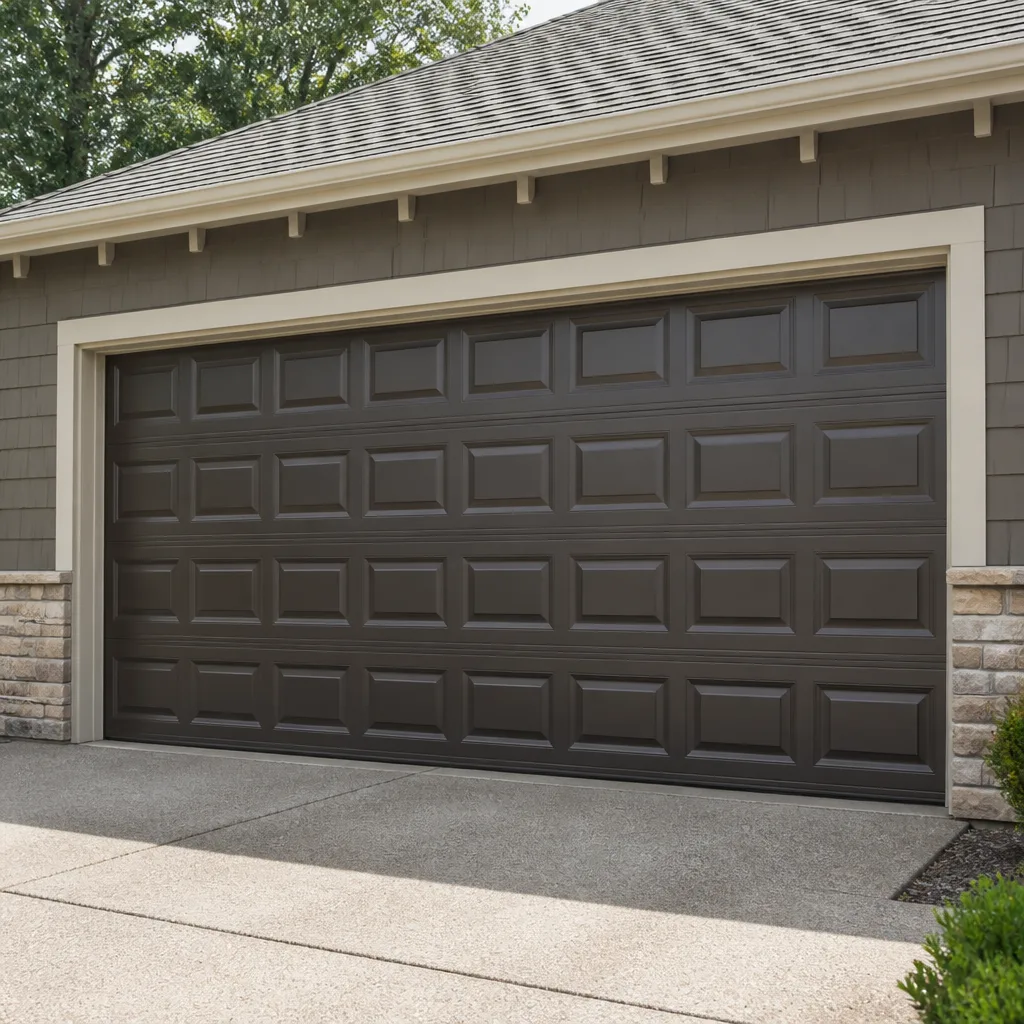 Raised-panel steel
 Carriage house
 Modern flush
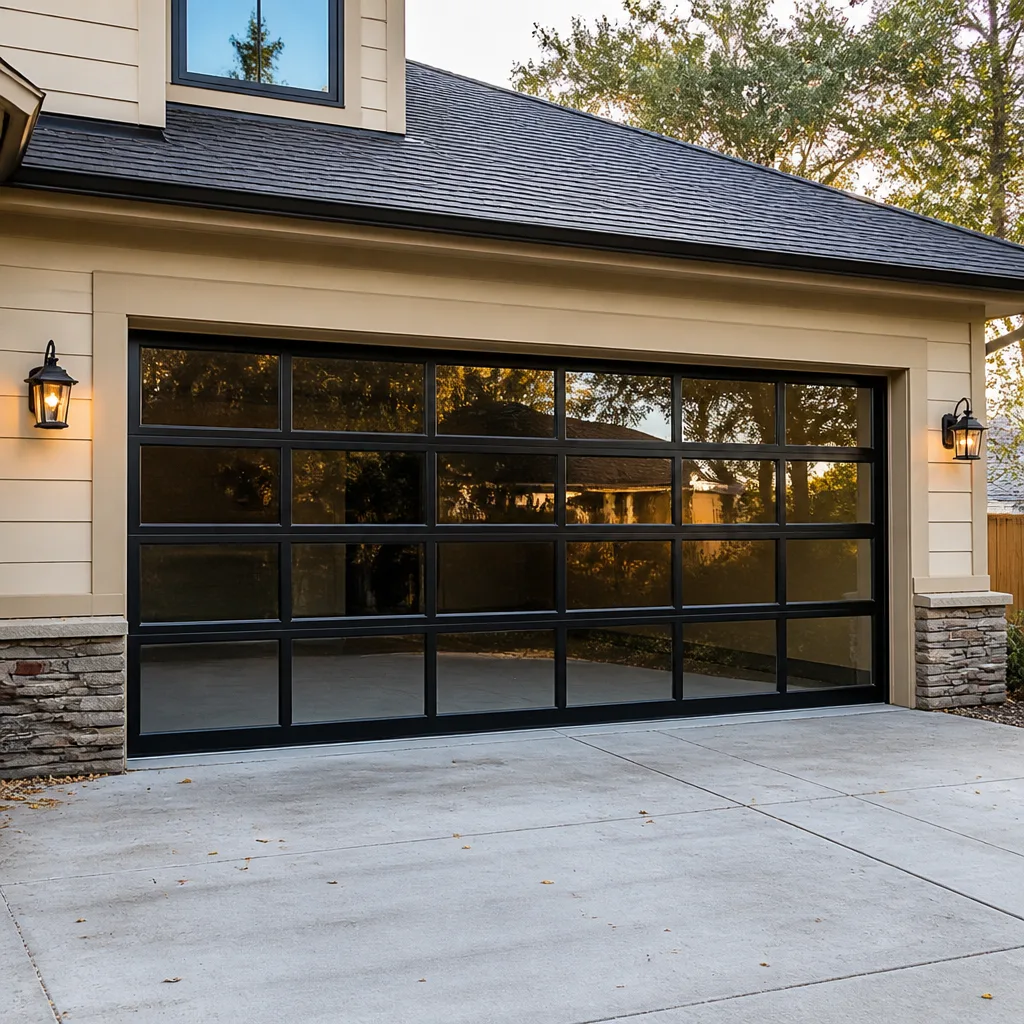 Full-view glass
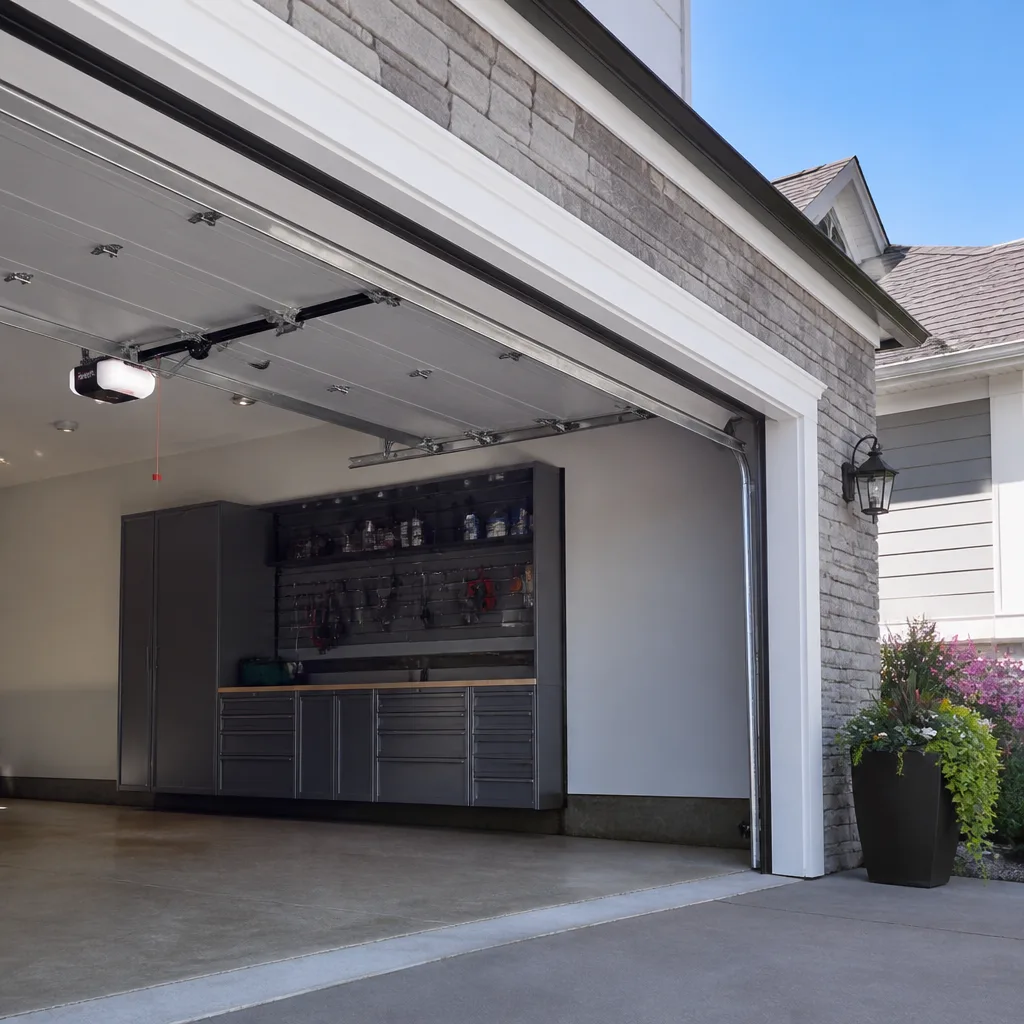 LiftMaster openers
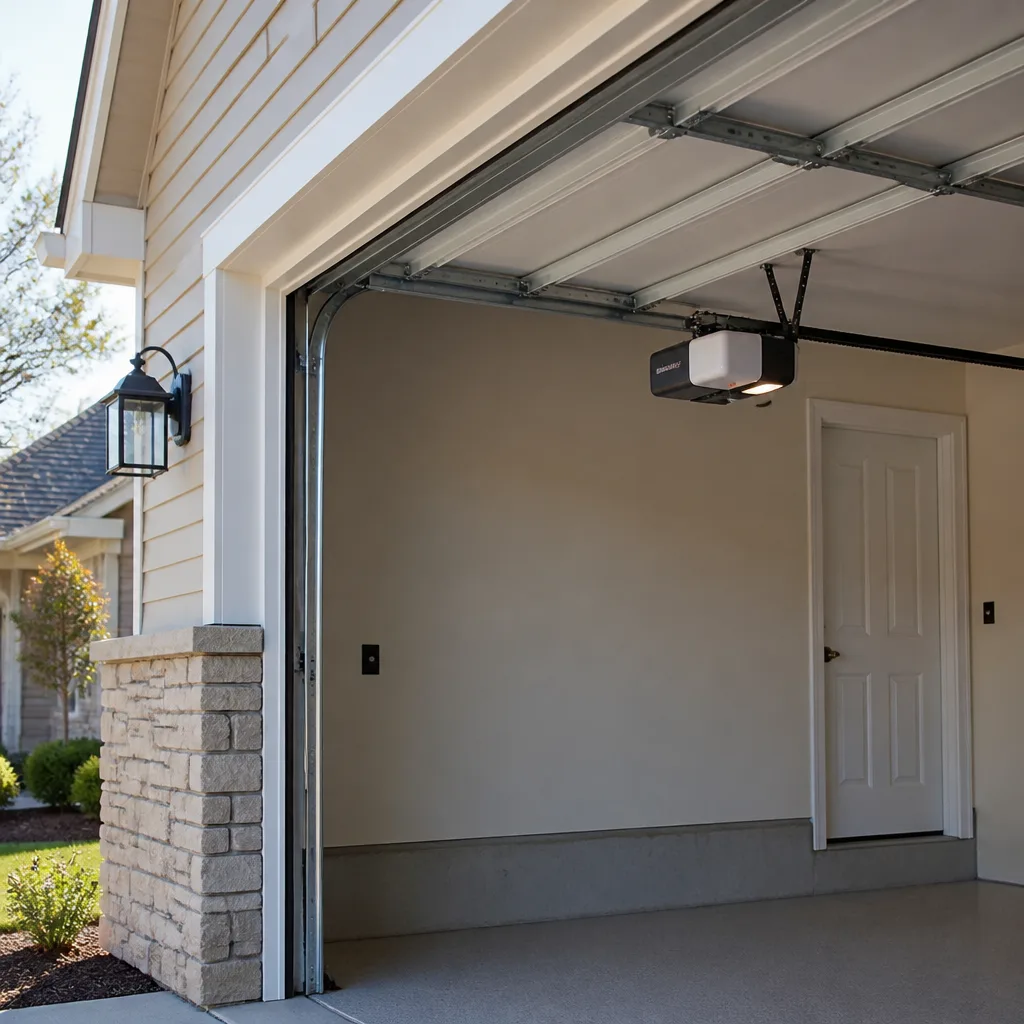 Chamberlain openers
Full 25-point door and opener safety check with every visit - springs, cables, rollers, tracks, and your LiftMaster or Chamberlain opener included
You get a price before we start. It does not change when the pro arrives.
Get your free estimateDIY vs Professional Garage Door: The Sun City Center Homeowner’s Decision Guide
Most garage door advice online treats every repair the same way: either you’re handy enough to do it or you’re not. That framing is wrong, and it’s dangerous. The real dividing line isn’t skill, it’s stored energy. A torsion spring under tension holds enough force to break bones or worse when it lets go, and no tutorial can hand you the feel for that. Meanwhile, plenty of garage door chores around a Sun City Center home are genuinely easy for a careful homeowner. This guide sorts the work task by task, so you know what’s safe to attempt, what needs a pro, and what you should never touch without the right tools and training.
Styles & brands we work with
- Raised-panel steel
- Carriage house
- Modern flush
- Full-view glass
- LiftMaster openers
- Chamberlain openers
Quick Answer
Some garage door work is safe for a careful homeowner: lubrication, visual inspections, track cleaning, and replacing a remote battery. Spring, cable, and high-tension hardware work is not, and should go to a trained technician every time. Everything in between depends on the task, the tool investment, and how much risk you’re willing to carry. When in doubt, call (855) 658-4128 for a free estimate before you start.
Table of Contents
- Why Springs Change the Whole Conversation
- The Task-by-Task Breakdown: DIY, Pro, or Never
- The Risk Calculation: Injury Cost vs. Professional Service
- The Florida Factor: Humidity and Hardware You Didn’t Account For
- Doing a Credible Diagnosis Before You Call
- The Real Tool List (and Whether It’s Worth Buying)
- Opener Work: Where DIY Gets Grey
- Common Mistakes to Avoid
- When to Call a Professional
- Frequently Asked Questions
Why Springs Change the Whole Conversation
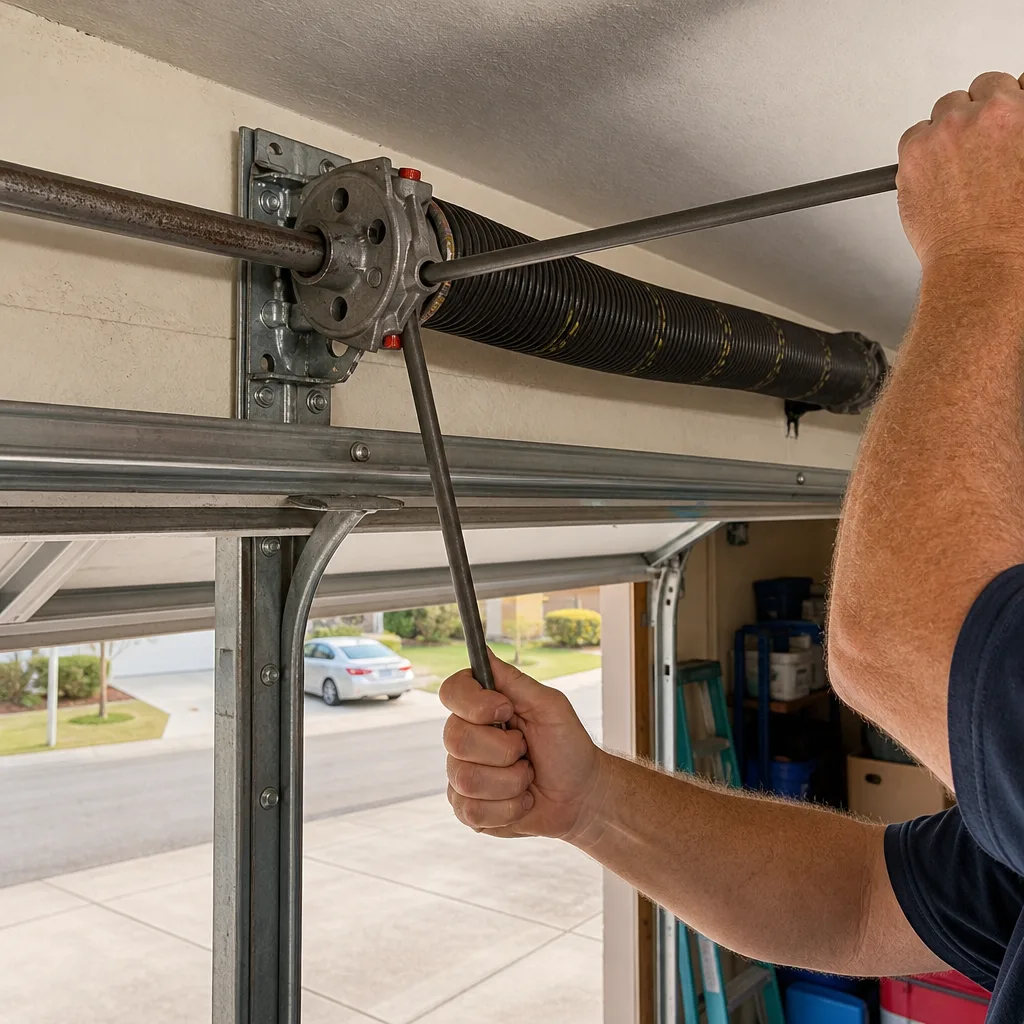
Torsion springs store energy. That’s their job. A standard torsion spring on a residential door holds hundreds of pounds of force under tension, and that force is released the moment the spring is adjusted, wound, or removed incorrectly. Extension springs are no gentler; they’re under load too, and older ones without safety containment can whip if they fail. The point isn’t to frighten you into calling a technician for everything. It’s to make clear that spring work sits in a category of its own, separate from every other garage door task.
What makes springs so dangerous is the tooling and the feel. Winding bars are the correct tool, but holding a wound spring steady while you work a set screw requires knowing how much tension you’ve got and what it should feel like. That’s a judgment call built from repetition, not something a video conveys. Our technicians have up to 9 years of experience, and spring work is still treated as a safety-critical job every time in Sun City Center, not a routine task anyone takes lightly.
Lower the spring risk by recognizing when to walk away. Watch for:
- A door that won’t stay up when you raise it partway
- A loud bang from the garage, followed by a door that won’t open
- A visible gap in a torsion spring (they split, not shatter)
- Extension springs with stretched or missing safety cables
- A door that feels impossibly heavy when you lift it manually
Any of these means the spring is compromised. Stop using the door, prop it safely if it’s open, and call for professional spring service. There is no safe DIY path through this. Garage door spring repair is a specialized job for a reason, and the reason is injury.
The Task-by-Task Breakdown: DIY, Pro, or Never
The clearest way to decide is to sort every common garage door job into one of three buckets: safe to attempt, professional-only, and never. Here’s how the work actually breaks down for a typical Sun City Center home.
Safe for a careful homeowner
- Lubrication of hinges, rollers, and the torsion tube with a proper garage door lubricant
- Visual inspection of cables, springs, rollers, and hinges for wear or damage
- Track cleaning and removing debris that’s causing binding
- Replacing a remote battery or reprogramming a remote using the opener manual
- Testing the safety reverse by placing an object in the door’s path
- Tightening loose bolts on the door panels (not the tension hardware)
- Wiping down and painting steel or aluminum panels to slow corrosion
Professional-only work
- Spring replacement (torsion or extension)
- Cable replacement or adjustment
- Track realignment when the door has come off-track
- Roller replacement on a door that must be de-tensioned to do it safely
- Opener motor or logic board replacement
- Panel replacement on a sectional door
- Any work on a door that’s already under tension
Never attempt without professional training
- Winding, unwinding, or adjusting torsion springs
- Removing spring hardware from a loaded system
- Working on a door that has partially collapsed or come off its tracks
- Adjusting cable tension on a door that’s still hung
- Anything involving the counterbalance system above the door
That last bucket is small but absolute. If a job lives there, no tool investment, no tutorial, and no amount of confidence makes it a good idea. Around Sun City Center, we meet plenty of capable homeowners who can handle the first list entirely on their own and are glad to pay a professional for the second and third.
The Risk Calculation: Injury Cost vs. Professional Service
Here’s the honest way to think about it. The cost of a professional spring replacement in Sun City Center is a known number on a written estimate. The cost of a spring-related injury is not. It’s an emergency room visit, possibly surgery, weeks away from work, and the door still needs fixing afterward. Framed that way, the decision isn’t “save money or spend money.” It’s “spend a predictable amount now, or gamble on an unpredictable one later.”
That math almost always points toward professional service for spring, cable, and high-tension work. The one-time estimate is finite. The injury exposure isn’t. And that doesn’t even count the door itself. A spring that releases wrong can bend tracks, break panels, or drop the door hard enough to cause secondary damage that costs more than the original repair.
Where the math flips toward DIY is on the low-risk chores. Lubrication, inspection, cleaning, and remote batteries cost a few dollars in supplies and a few minutes of time. There’s no version of that job worth paying a service call for, and no real injury risk if you follow the manufacturer’s guidance. Recognizing that split is the whole discipline of this guide.
For anything in the middle ground – a hesitant opener, a noisy door, a slow-closing door – get a written estimate before you decide. That way the comparison is between two known numbers, not between a known number and a guess. Our team works on LiftMaster, Chamberlain, Genie, Clopay, Amarr, and other leading systems, so the diagnosis reflects the actual equipment you own. Call (855) 658-4128 and we’ll quote the job before anything starts.
The Florida Factor: Humidity and Hardware You Didn’t Account For
Most garage door tutorials you’ll find online were filmed in dry climates. Their advice assumes hardware that isn’t fighting constant moisture. In Sun City Center, humidity is a year-round condition, and it changes how garage door maintenance actually goes. Bolts that should turn freely may be seized. Hinges that look fine may already be pitted under the paint. Rollers may have flat spots from sitting loaded in the heat. The tutorials aren’t wrong, exactly, but they’re optimistic about how easily things come apart.
What this means in practice:
- Expect stuck fasteners. A job that’s a 10-minute fix in a dry climate can turn into a broken bolt and a stripped bracket here.
- Inspect more often. Humidity-driven degradation shows up faster than most schedules assume.
- Lubricate on a real schedule. A proper garage door lubricant applied a few times a year slows hinge and roller wear considerably.
- Watch for rust at the bottom panel. The lowest panel takes the most moisture and often the first corrosion. Catching it early means a repair, not a panel replacement.
- Check the springs for corrosion. Surface rust on a spring is a warning sign, not a cosmetic issue, and it should be checked by a professional, not sanded off.
The humidity factor also affects how quickly a small DIY attempt can escalate. A homeowner who planned to replace a couple of rollers and found frozen hinge pins halfway through is now working on a door that won’t close properly, in the heat, with a car stuck inside. That’s the moment a “simple” project becomes a same-day garage door repair call. The humidity didn’t cause the failure; it just made the easy plan harder than the video promised.
If your door lives on a south- or west-facing wall, expect faster wear than the north side of the same house. That’s Sun City Center-specific enough that it’s worth a look every few months, especially before the wetter stretches of the year.
Doing a Credible Diagnosis Before You Call
You don’t need to fix the door to save money here. You just need to describe the problem accurately. A technician who arrives knowing what you’ve already observed skips the discovery time, which means the estimate is more precise and the repair moves faster. A few minutes of careful observation before you dial goes a long way.
Follow these steps:
- Look at the door from outside. Is it straight? Are panels aligned? Any gaps at the bottom corners?
- Test the manual release. Pull the red cord and try lifting the door by hand. It should feel light and stay open at roughly halfway. If it feels heavy or slams down, the spring or counterbalance is suspect.
- Listen with the opener running. Grinding, squealing, or a rhythmic thump narrows the problem to a specific area.
- Watch the safety reverse. Place a small object in the door’s path and confirm the door reverses. If it doesn’t, the opener’s safety system needs attention.
- Check the wall button and the remote separately. If one works and the other doesn’t, you’ve isolated the fault.
- Look at the springs and cables. Note visible rust, gaps, or fraying. Don’t touch – just observe.
- Take a photo of the door and opener labels. The model number helps the technician bring the right parts.
What you should never do during diagnosis: pry at springs, adjust the opener’s force limits blindly, or try to re-hang a door that’s come off its tracks. Observation yes, intervention no. When you call for garage door opener repair, tell us what you observed. It’s the fastest route to an accurate estimate, and it’s how a professional goes straight to the likely cause instead of guessing.
The Real Tool List (and Whether It’s Worth Buying)
The honest answer is that the tools required for legitimate DIY garage door work fall into two groups: the ones you probably already own, and the ones that only make financial sense if you plan to work on garage doors repeatedly. For a one-time repair, the second group rarely pencils out.
Tools you likely already have
- Socket set and wrenches
- Screwdrivers (Phillips and flathead)
- A proper garage door lubricant (not WD-40)
- Work gloves and safety glasses
- A step ladder rated for your weight
- A flashlight
Specialty tools that signal “this is pro work”
- Winding bars for torsion springs – the wrong tool here is dangerous, not just ineffective
- Cable puller and locking pliers for safe cable work
- A door-holding fixture to keep a door in place while you work
- Spring winding charts to match the correct wind and size
- Torque specs and adjustment procedures from the door’s documentation
A winding bar looks like a simple steel rod. It isn’t. Buying one without the training to know how much tension is on the spring is like buying a scalpel without medical training. The tool doesn’t confer the skill. For a one-time spring repair, the cost of the specialty tools, the safety gear, and the risk you’re carrying are all greater than a written professional estimate.
For a door that’s just noisy or sluggish, the DIY tool investment makes sense. For a door that’s failed on a spring or cable, the investment doesn’t make sense. That’s the dividing line. A Sun City Center homeowner with a clean, quiet door needs a can of lubricant and a Sunday afternoon. A homeowner with a snapped spring needs a call to Sun City Center Garage Door Repair.
Opener Work: Where DIY Gets Grey
Openers are the one area where DIY can be reasonable, but only for specific tasks. The grey zone comes from the fact that modern openers split into two very different halves: the mechanical drive system and the electronics. One is physical and heavy. The other involves line voltage, and that’s where DIY should stop.
Safe opener tasks for a homeowner:
- Changing a remote battery
- Reprogramming a remote or keypad using the opener’s manual
- Cleaning the safety-eye lenses
- Adjusting the force or travel limits using the manufacturer’s instructions (carefully)
- Replacing a light bulb in the opener housing
Tasks that should go to a technician:
- Replacing a motor, logic board, or capacitor
- Rewiring a wall button or safety eye
- Installing a new opener
- Diagnosing an intermittent fault that reappears after a reset
- Working on a smart opener that’s lost its Wi-Fi or app connection after a firmware update
The line isn’t about your mechanical confidence. It’s about the fact that some of these tasks involve electrical work in a housing that may or may not have a dedicated disconnect. A qualified technician knows the safe sequence without having to look it up. Chamberlain and Genie models, in particular, are among the systems we see most often in Sun City Center, and the diagnostic path differs between smart and legacy units. Knowing that up front saves a lot of trial and error.
One more thing worth flagging: an opener that’s repeatedly reversing isn’t necessarily an opener problem. It’s often the door’s counterbalance. If you replace the opener and the door still misbehaves, you’ve solved the wrong problem. A proper diagnosis looks at the whole system together, which is why our single-trade focus matters. We work on garage doors only, and that means we look at the door as a system, not just the box on the ceiling.
Common Mistakes to Avoid
- Working a spring alone. Even trained technicians avoid working springs without a second set of hands nearby and the right locking tools. Doing it solo removes your safety net.
- Buying a winding bar and assuming that’s the whole skill. The tool is the least important part of spring work. The feel for tension and the safe sequence is what a technician brings.
- Ignoring a slow-opening door until it fails. A lagging door is usually a worn spring or a strained opener. Waiting for the bang means an emergency call, not a scheduled repair.
- Spraying WD-40 on the tracks. WD-40 attracts dirt and doesn’t lubricate the right parts. It makes the door noisier and can make it bind faster.
- Prying a door back onto its tracks. A door off-track is under unusual load. Prying it can release that load unpredictably. This is a stop-and-call moment.
- Replacing the opener when the springs are the problem. Repeatedly reversing doors are a classic sign of a balance issue. Throwing a new opener at it wastes money and doesn’t fix the door.
- Assuming a dry-climate tutorial applies here. Sun City Center humidity seizes fasteners and accelerates corrosion. The video’s 10-minute fix can be a two-hour job, or a broken bolt, on your door.
When to Call a Professional
Call a professional when the job involves springs, cables, high-tension hardware, a door that’s come off its tracks, or any electrical fault inside the opener housing. Call also when your diagnosis points to a part you don’t already own, when a repair has already been attempted once, or when the door has stopped working entirely and the car is stuck inside. These scenarios are not moral tests of your handiness. They’re situations where the risk or the tool investment outweighs the DIY option.
Sun City Center Garage Door Repair offers free estimates in Sun City Center – call (855) 658-4128. We’ll confirm what’s gone wrong, explain the reasoning, and quote the work before anything starts, so you can compare the estimate against the DIY path with actual numbers instead of guesses. Emergency service is available for a snapped spring or a stuck door, because a garage door that won’t open stops the household, not just the car.
Frequently Asked Questions
No. Torsion and extension springs store enough force to cause serious injury when they release, and the training to do it safely isn’t something a video conveys. This is a professional-only job even for homeowners who are otherwise confident and handy. In Sun City Center humidity, springs also carry hidden corrosion that can make the risk worse. Call (855) 658-4128 for a free estimate before you try anything on a spring.
Lubrication, visual inspection, track cleaning, remote battery replacement, and testing the safety reverse are all safe for a careful homeowner. These tasks carry no meaningful injury risk if you follow the manufacturer’s guidance. They also form the routine that keeps a door healthy between professional service calls. Stick to those and you’ll keep your door serviced without ever touching high-tension hardware.
Pull the manual release and try lifting the door by hand. If it’s heavy or won’t stay up, the issue is the door’s counterbalance, not the opener. If it lifts smoothly by hand but the opener struggles, the fault is likely in the opener. That single test narrows the diagnosis more than any other step. Use it before you spend money on parts, and call (855) 658-4128 if the answer isn’t obvious.
No. The written estimate sets the price, and the work is quoted and agreed before anything starts. If we find something during the job that changes the scope, you’ll hear about it before we do anything else. That policy exists because the second fear after “how much” is “will the invoice be bigger than the quote.” It won’t be, if the quote is written correctly to begin with.
The local professionals we connect you with are licensed and insured as their state requires. Our technicians have up to 9 years of experience, and garage doors are the only thing we work on. That focus is why we can diagnose correctly across LiftMaster, Chamberlain, Genie, Clopay, Amarr, and Wayne Dalton systems rather than guessing at them. Call (855) 658-4128 with your model number and we’ll confirm before we arrive.
Emergency service is available for a stuck or broken door, and a snapped spring or a car trapped inside is the right reason to call. We’d rather hear from you early than after a door has dropped. Call (855) 658-4128 and we’ll book the earliest available time and give you a written estimate before any work starts.
The Bottom Line
The DIY-versus-professional question for garage doors comes down to which tasks carry real injury risk and which don’t. Lubrication, visual inspections, track cleaning, and remote batteries are safe and worth doing yourself. Springs, cables, high-tension hardware, and most opener internals are not, no matter how confident you feel. Factor in Sun City Center humidity, which seizes fasteners and accelerates corrosion, and the case for professional work on the dangerous half gets stronger. Do the easy maintenance regularly. Diagnose before calling. Then hand off the dangerous work to a trained technician and get a written estimate. That’s the split that keeps the door working and keeps you safe.
If your garage door needs attention in Sun City Center, call (855) 658-4128 for a free estimate. We work on garage doors only, we quote the price before work starts, and we can work with your insurer if a repair ends up on a claim.
Written by the team at Sun City Center Garage Door Repair.
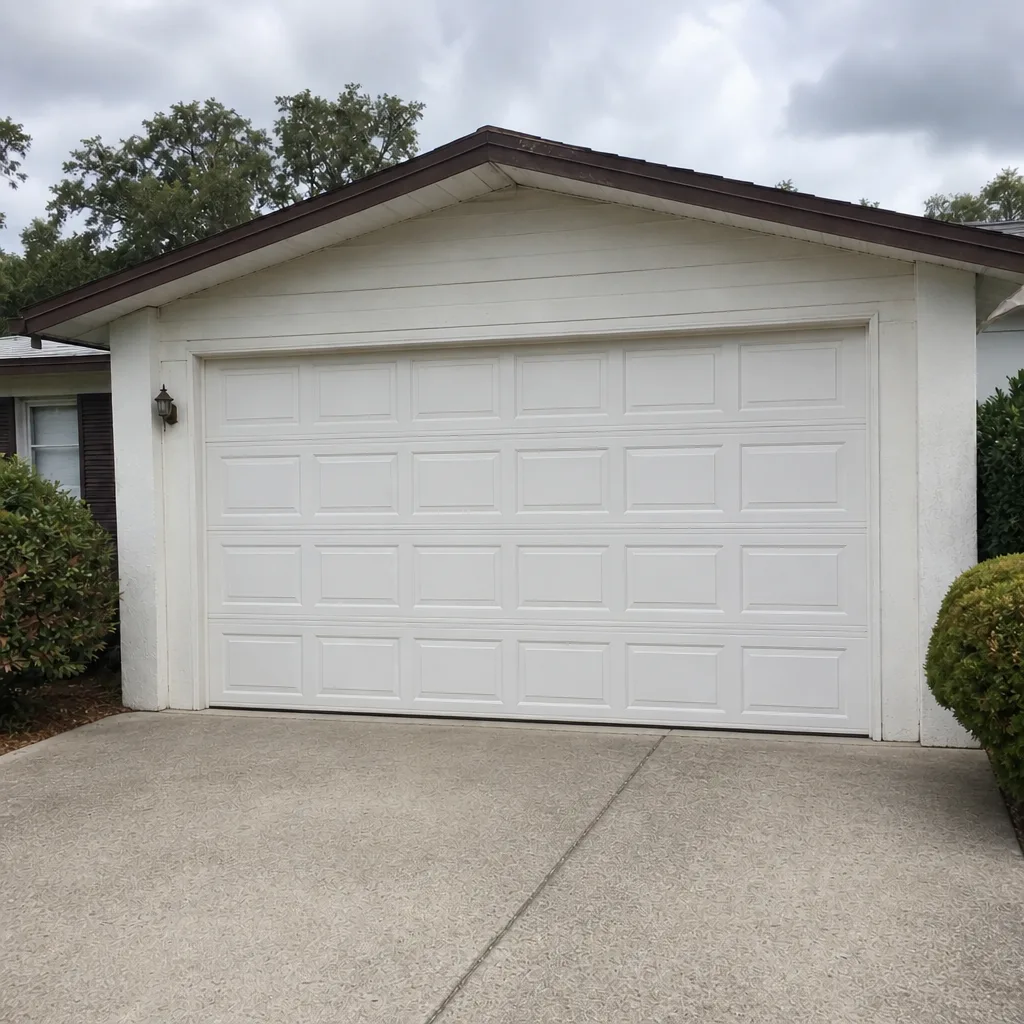
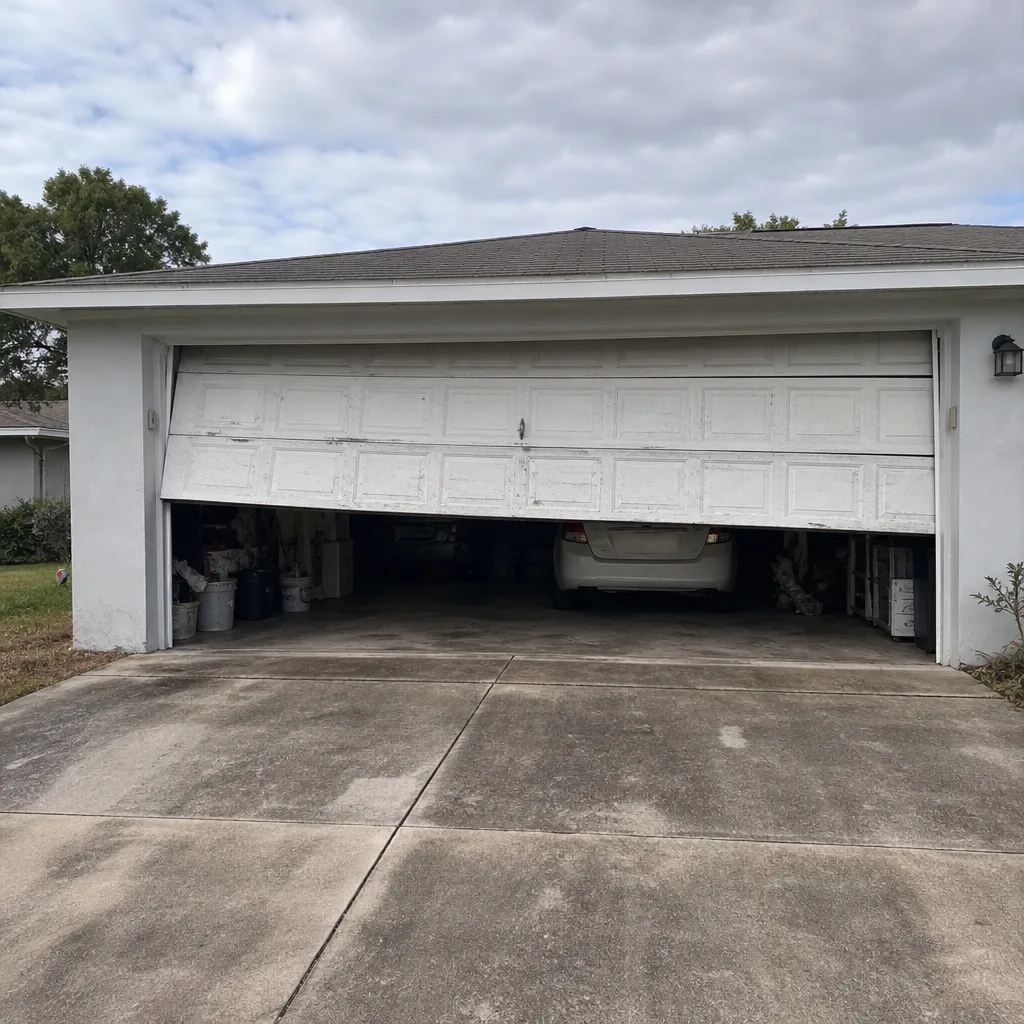
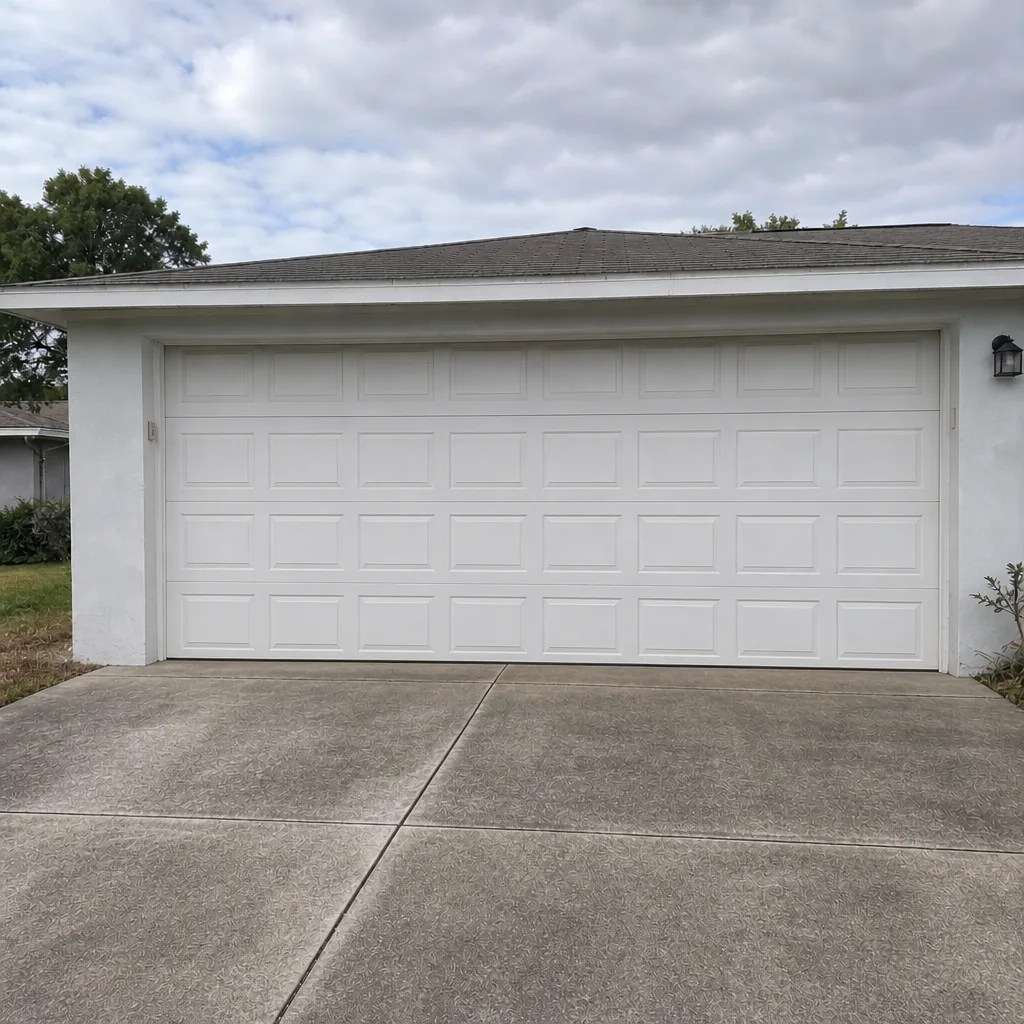
See the difference
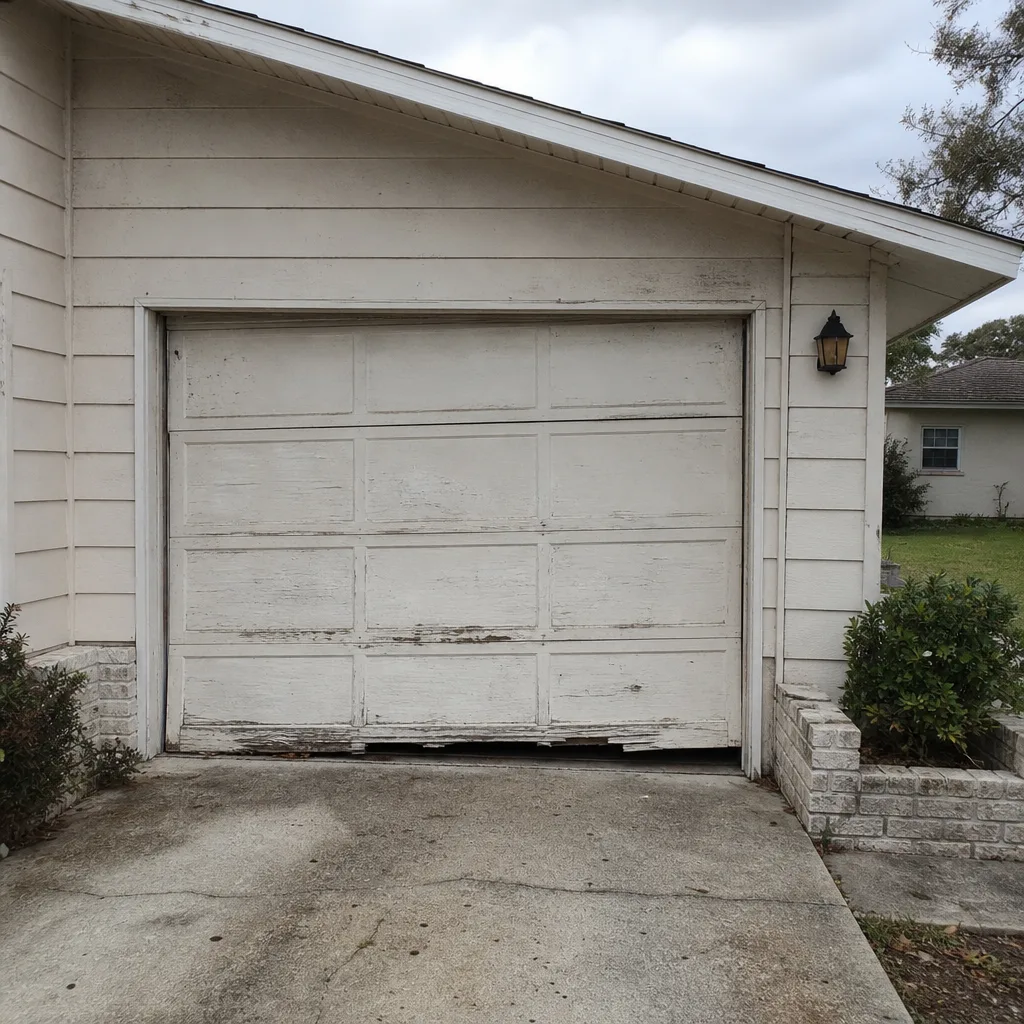 Before
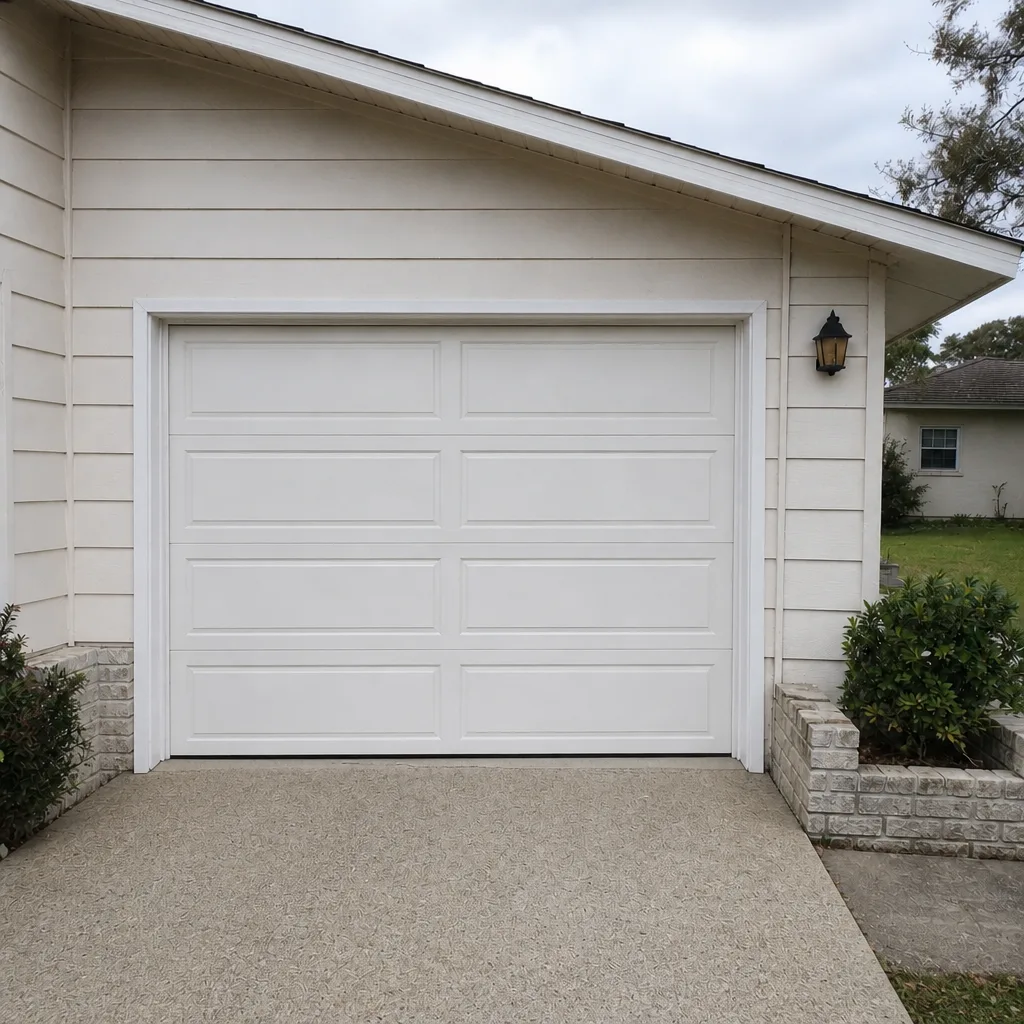 After
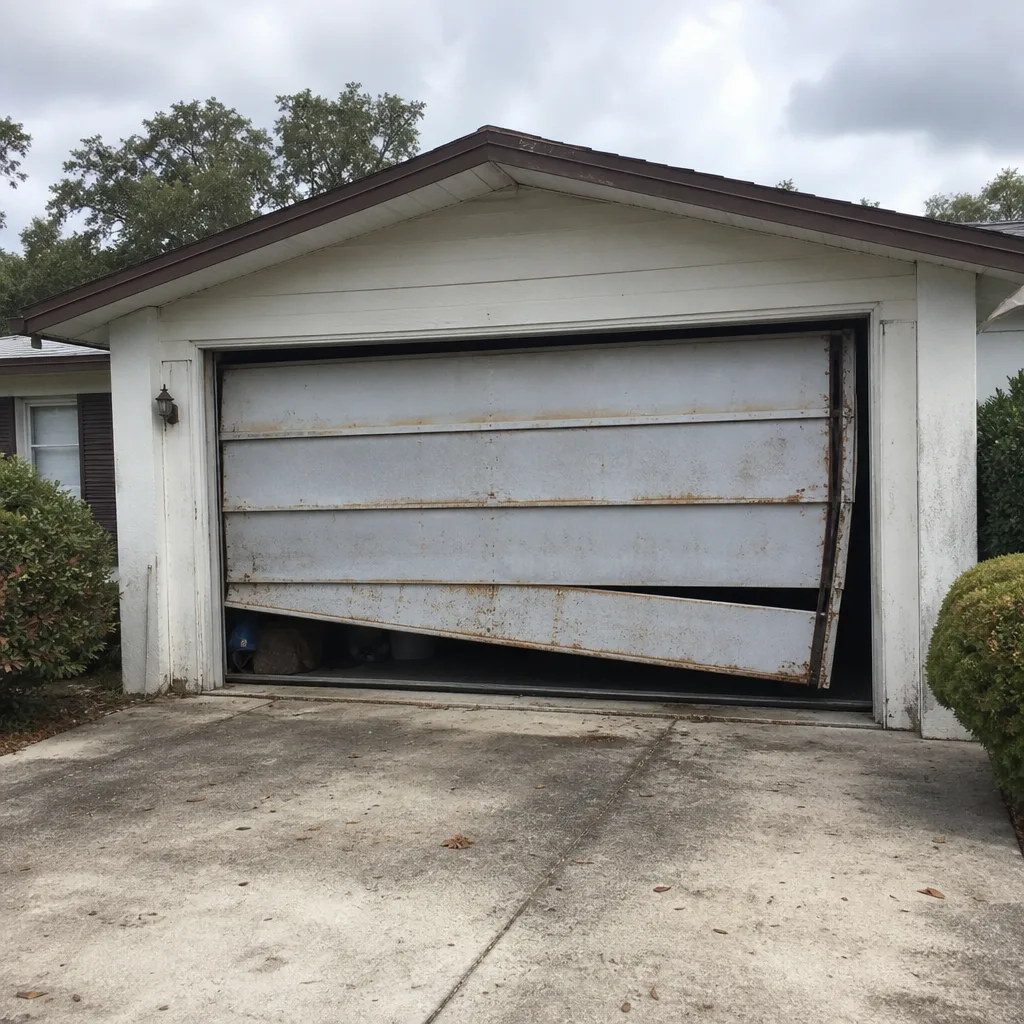 Before
 After
 Before
 After