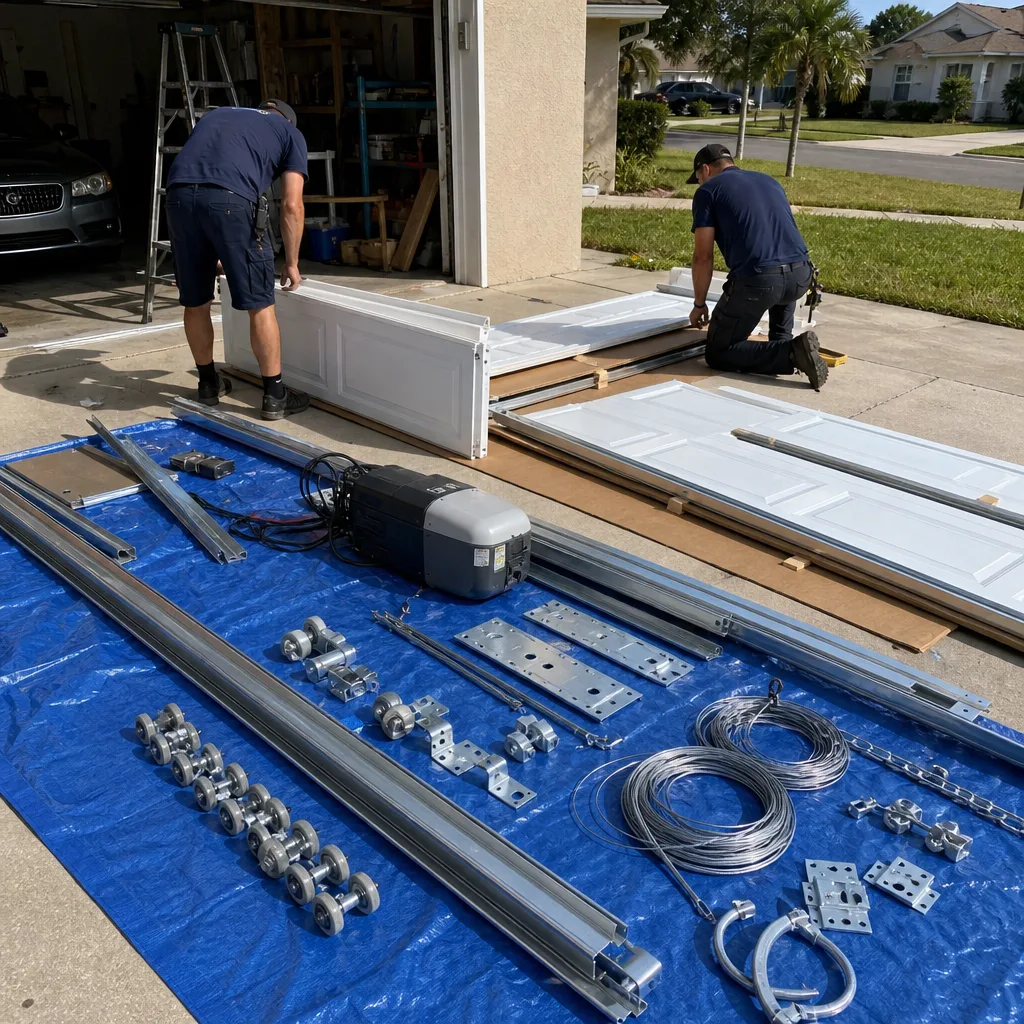
Last updated November 23, 2026
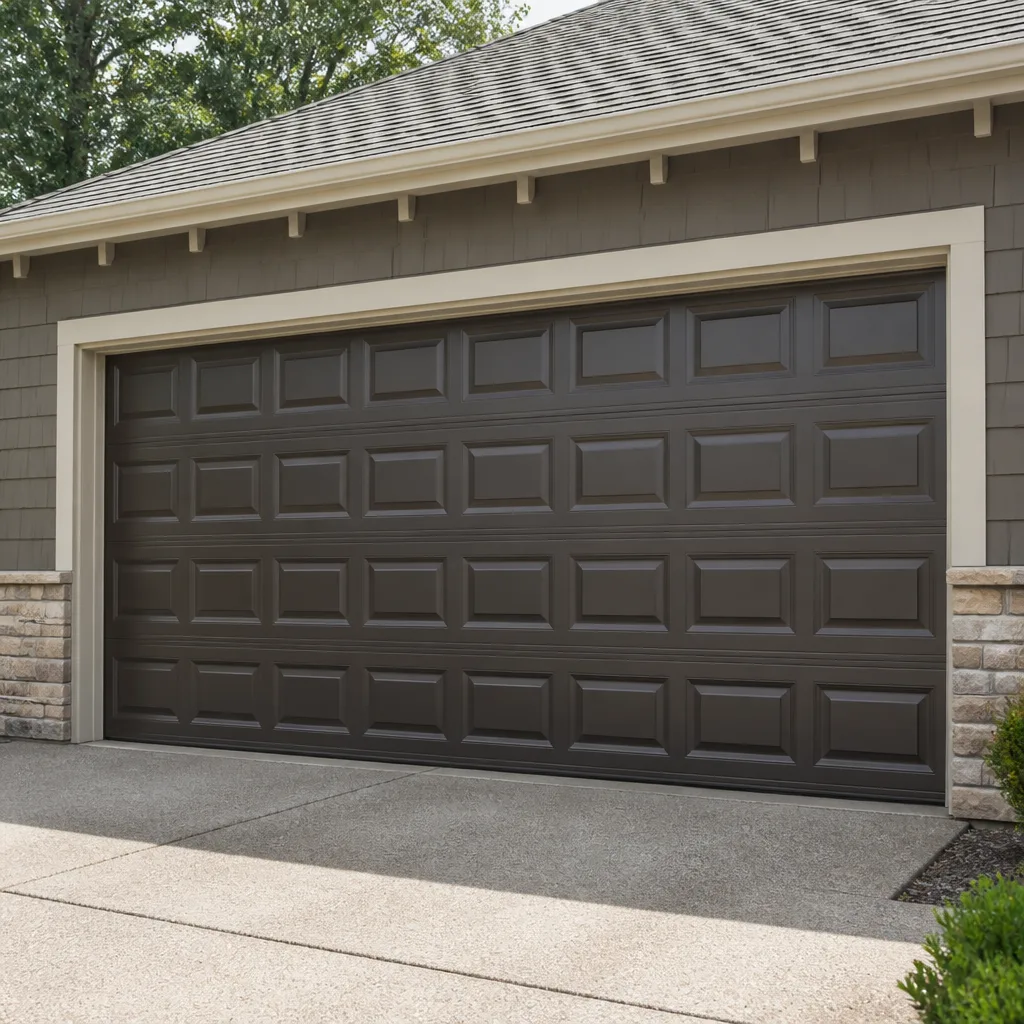 Raised-panel steel
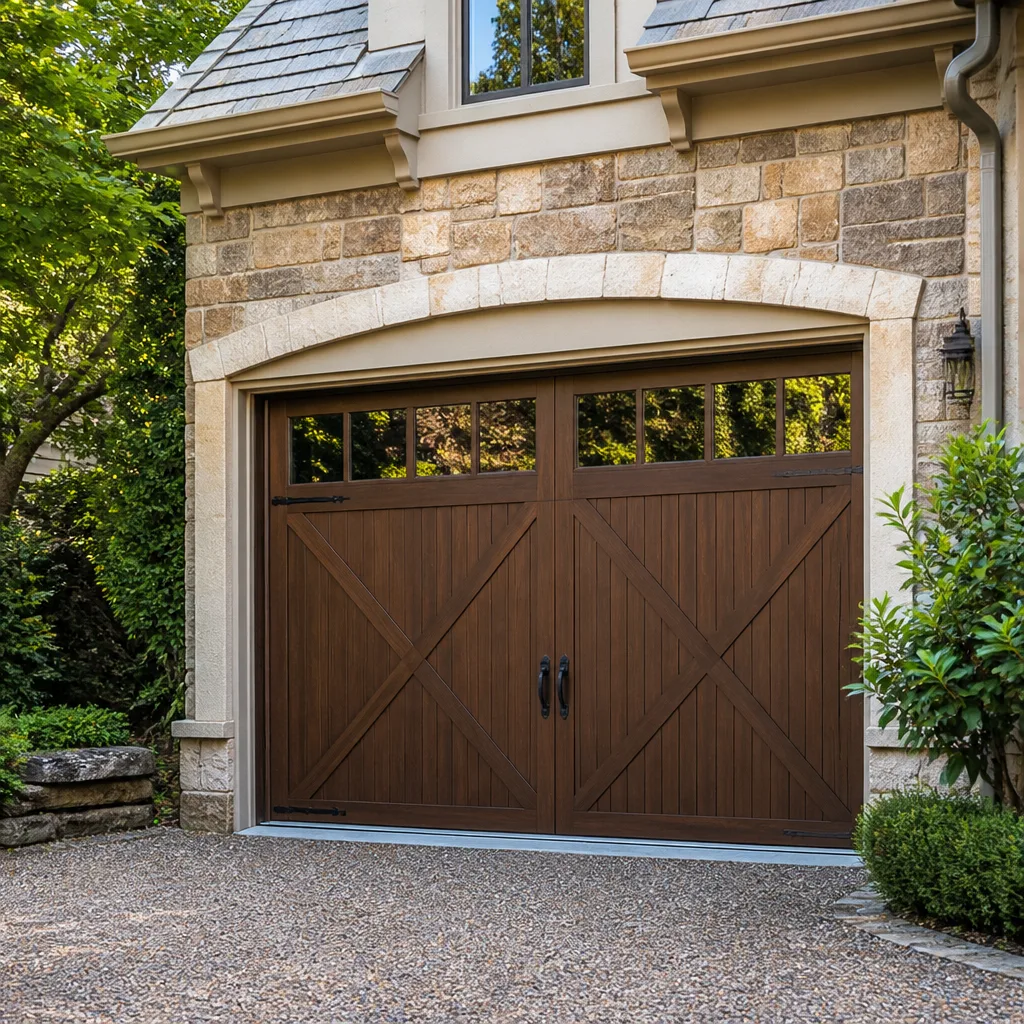 Carriage house
 Modern flush
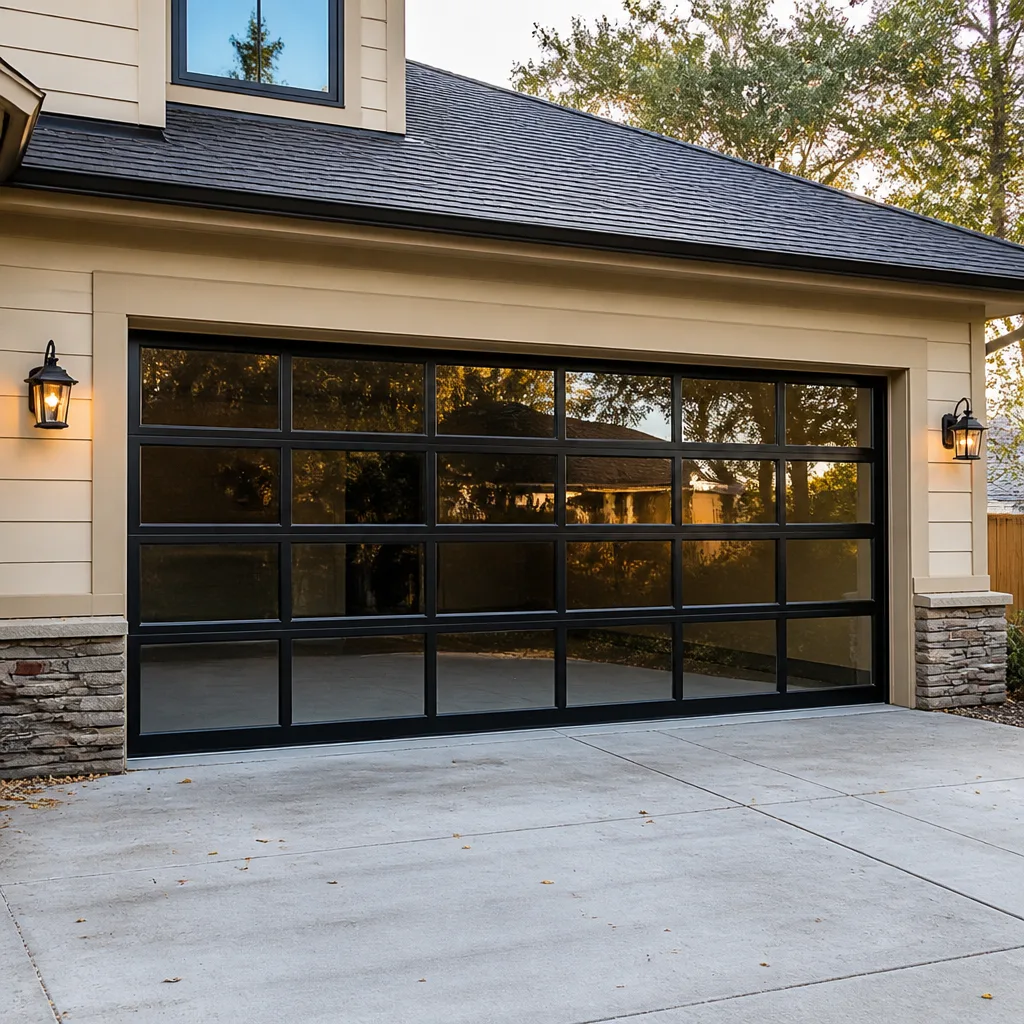 Full-view glass
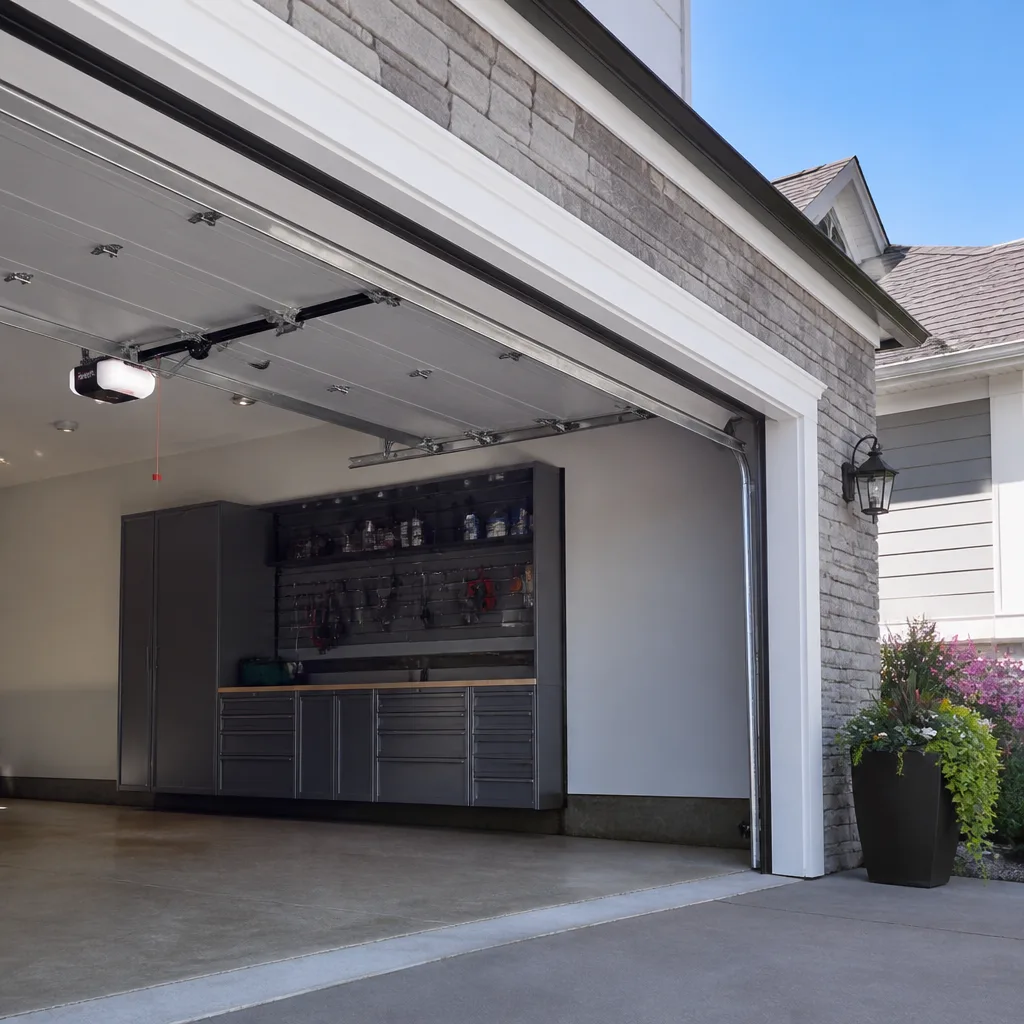 LiftMaster openers
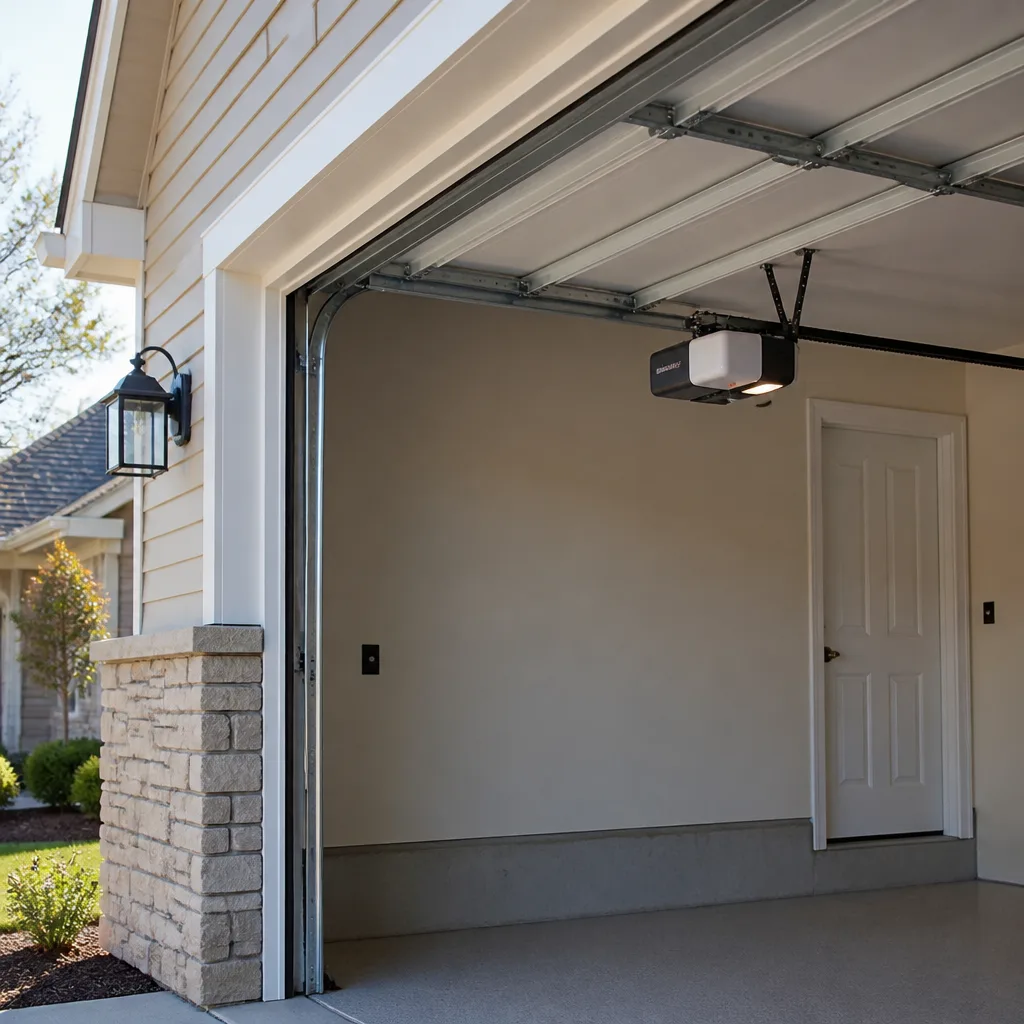 Chamberlain openers
Full 25-point door and opener safety check with every visit - springs, cables, rollers, tracks, and your LiftMaster or Chamberlain opener included
You get a price before we start. It does not change when the pro arrives.
Get your free estimateGarage Door Permits, Codes & Inspections in Sun City Center, FL: What You Need to Know
Here’s the part most homeowners learn too late: the door itself is rarely the problem. The paperwork is. A garage door that went in without a permit sits quietly for years and only surfaces when you’re signing closing documents or filing a storm claim, and unwinding it then takes more time and money than pulling the permit would have cost in the first place. We work on garage doors every week in Sun City Center, and we’ve watched this play out enough times to know it’s worth explaining properly. This guide covers when Hillsborough County requires a permit for a garage door job, how the inspection actually works, what wind-load rules mean for your door, and how to fix an unpermitted replacement before it costs you a sale.
Quick Answer
In Sun City Center, replacing a garage door or installing a new one generally requires a building permit through Hillsborough County, while repairing the existing door, springs, or opener usually does not. The replacement door must meet Florida’s wind-load requirements for your area, which is why the permit and the final inspection exist. Repairs that swap parts on the door already in place typically fall outside the permit threshold, but it’s always worth a call to the county building department to confirm before work begins.
Styles & brands we work with
- Raised-panel steel
- Carriage house
- Modern flush
- Full-view glass
- LiftMaster openers
- Chamberlain openers
Table of Contents
- When does a garage door job need a permit in Sun City Center?
- Repair versus replacement: where the line actually falls
- Florida wind-load rules and what “Miami-Dade approved” means for your door
- How the permit process works: steps, timeline, and inspection
- What an unpermitted door does to your insurance coverage
- How to permit a door that was replaced without one
- Brand matters: Clopay, Amarr, Chamberlain, and Genie in a permit review
- Common mistakes to avoid
When does a garage door job need a permit in Sun City Center?
A straight answer: Hillsborough County generally treats a full garage door replacement as a structural alteration that needs a permit, and treats routine repair of the existing door as maintenance that does not. The distinction matters because the two jobs look similar from the driveway. You’re still pulling out of the same opening at the end of the day.
The threshold comes down to what leaves the building and what arrives. Ask yourself these questions before you book anything:
- Is the door being removed and replaced? New door, new track, new hardware into the framing. That’s a replacement, and it typically needs a permit.
- Is the opening changing size? Widening or raising the rough opening is structural work and always requires a permit.
- Is the door staying in place? Replacing torsion or extension springs, rollers, hinges, cables, or the opener on the door already installed is repair. That usually does not trigger a permit.
- Is the header or framing being altered? Any change to the structure around the opening goes through the county.
In Sun City Center, most of the housing stock is single-story and the garages face the street, so a replacement is visible from the road and easy for an inspector or appraiser to check. That’s not a reason to skip the permit. It’s a reason the county cares about the job being done to code.
Codes shift, and the county’s interpretation of the threshold is the one that counts. Before any work starts, call the Hillsborough County building department and describe the job in plain terms. If a contractor tells you a permit isn’t needed for a full replacement, get that in writing or get a second opinion. We handle garage door repair and installation across Sun City Center, and we’ll always tell you which side of the line your job falls on before we schedule it.
Repair versus replacement: where the line actually falls
Most homeowners think of “garage door work” as one thing. It isn’t. The permit question depends entirely on which category your job belongs to, and getting it wrong in either direction costs you something. Skipping a needed permit leaves you with a paperwork problem. Pulling an unnecessary one just costs time and a fee.
Here’s how the two categories usually break down in Sun City Center:
- Repair, typically no permit: spring replacement, cable and drum work, roller and hinge swaps, panel replacement on a door that stays in its existing frame, opener repair, opener replacement, track realignment, and weather seal replacement.
- Replacement, typically needs a permit: a new door and track set going into the existing opening, a different door model or material, a changed door size, or any work that touches the framing or header above the opening.
The gray zone is panel work. A single damaged section on a Clopay or Amarr door can often be swapped without a permit because the door’s structural system stays intact. But if the panels being replaced change the door’s rated performance, or if the job involves re-anchoring track into the framing, you’re likely into permit territory. That’s the kind of question worth a two-minute call to the county rather than a guess.
One more local note: Sun City Center has a large number of homes where the original door has been in place for a long time. When a door that old is replaced, the new one has to meet current wind-load standards, not the standards in force when the house was built. That gap is exactly what the permit and inspection process exists to catch.
Florida wind-load rules and what “Miami-Dade approved” means for your door
Florida’s building code requires garage doors to be rated for the wind pressures expected at their location, and the garage door is one of the most wind-vulnerable parts of a house. When a garage door fails in a storm, the pressure equalizes and the roof above it becomes far more likely to lift. That’s why the door carries a rating in the first place, and why the county wants to see the rating documented.
You’ll hear the phrase “Miami-Dade approved” thrown around a lot in Sun City Center. Here’s what it actually means. Miami-Dade County maintains its own product approval system, which is one of the strictest in the country, and a door that carries that approval has been tested to withstand high design pressures and large missile impact. A Miami-Dade label is a strong credential. But it isn’t a magic pass. What matters for your specific home is that the door’s rated design pressure meets or exceeds what the code requires at your address, and that the door is installed with the approved anchoring and hardware the rating depends on.
A door rated for a high wind pressure installed with the wrong fasteners, or on framing that wasn’t prepared for it, does not perform to its label. That’s the failure mode we see most often, and it’s invisible until a storm tests it. If you’re weighing door models, Clopay and Amarr both publish wind-load ratings for their product lines, and the rating you need is set by your home’s location and construction, not by the brand name on the door.
Several Sun City Center communities sit in areas where wind-borne debris rules apply, so confirm your address’s requirements with the county before ordering. A licensed installer should be able to supply the product approval documentation alongside the door.
How the permit process works: steps, timeline, and inspection
The permit process for a garage door replacement is more straightforward than most homeowners expect. It’s paperwork, a review, an inspection, and a sign-off. The job itself doesn’t change. Here’s how it usually runs in Sun City Center:
- Confirm the requirement with the county. Call the Hillsborough County building department, describe the job, and confirm whether a permit is needed and which type.
- Gather the product documentation. You’ll need the door’s product approval or evaluation report showing its wind-load rating, along with the manufacturer’s installation instructions.
- Submit the permit application. This is typically done by the contractor or the homeowner, and it includes the scope of work, the door specification, and the property details.
- Pay the permit fee. Fees vary by job valuation and jurisdiction, so ask the county for the current fee at intake rather than relying on a number you heard secondhand.
- Receive the permit and schedule the work. Installation is measured, ordered, and scheduled. This isn’t a same-day job, and nobody should promise you it is.
- Install the door to the approved specification. The anchoring, hardware, and track have to match what the rating depends on.
- Call for the inspection. The inspector verifies that the installed door matches the permitted specification and that the anchoring is correct. If it passes, the permit closes.
The inspection is the part people worry about most, and it’s usually the shortest part of the whole process. The inspector is checking that what’s on the house matches what’s on the paperwork. If it does, you’re done. If it doesn’t, you get a correction notice and a second visit, which is why the installation has to follow the approved spec exactly.
Timelines depend on the county’s workload and how complete your paperwork is. Budget for the permit review and the inspection as separate waiting periods, and don’t schedule the old door’s removal until the permit is in hand. For an opener problem on a door that’s staying put, that’s a repair and you can skip this section entirely. Our garage door opener repair covers Chamberlain, Genie, LiftMaster, and Craftsman units without any permit process attached.
What an unpermitted door does to your insurance coverage
An unpermitted garage door replacement can create a coverage problem after a storm, and not the kind you can argue your way out of on the phone. When you file a wind-damage claim, the adjuster looks at whether the damaged component was installed to code. A door that was replaced without a permit and without documented wind-load compliance gives the insurer a question to ask, and that question can slow or complicate the claim.
This matters more in Sun City Center than in a lot of places because the wind-load rating isn’t decorative. It’s the basis for the insurer’s expectation of how the door should perform. If the door on your house can’t be tied to an approved specification, the insurer has no way to confirm it met the standard it was supposed to meet.
What insurers actually want to see is a paper trail. Keep these documents together:
- The closed building permit with the final inspection sign-off
- The door’s product approval or evaluation report showing its wind-load rating
- The installation invoice, listing the door model and hardware used
- Any manufacturer warranty documentation for the door and its finish
If you’re reviewing your policy, tell your agent when the door was replaced and confirm the door is listed correctly. A five-minute conversation now beats a disputed claim later. And if you’re in the middle of a spring failure rather than a replacement, that’s a repair and a call for garage door spring repair is where to start. Springs, cables, and torsion systems are genuinely dangerous to handle, and we treat them as a core specialty for that reason.
How to permit a door that was replaced without one
If you bought a Sun City Center home and the garage door was replaced without a permit, the situation is fixable. It’s easier to fix before you list the house than during a closing, so the earlier you catch it the better. Here’s how to approach a retroactive permit:
- Pull the property’s permit history. Ask the Hillsborough County building department for the permit records on your address and confirm whether the door replacement was ever permitted.
- Identify what’s actually installed. Get the door’s make and model from the label on the door or the panel edge. Clopay, Amarr, Wayne Dalton, and Raynor all mark their doors, and the model number is what the county needs.
- Request the product approval documentation. The manufacturer or a supplier can supply the evaluation report showing the door’s wind-load rating.
- Ask the county about a retroactive or after-the-fact permit. Requirements vary, and some jurisdictions charge a higher fee for work started without a permit. Get the specifics in writing before you submit.
- Expect an inspection. The inspector will verify that the installed door matches the documentation and that the anchoring meets the approved specification. If something doesn’t, it gets corrected.
- Close the permit and keep the record. Store the sign-off with your closing documents and give a copy to your insurer.
If the door installed without a permit doesn’t meet the wind-load requirement for your address, the fix is a door that does. That’s a conversation to have before you list, not after an offer is accepted. We can inspect the door already on the house and tell you what it is and whether it’s likely to pass. Our Sun City Center garage door repair work covers both the inspection and the replacement if it comes to that.
Brand matters: Clopay, Amarr, Chamberlain, and Genie in a permit review
The brand on your door and opener affects the paperwork, and it affects how quickly a technician can diagnose a fault. We work on LiftMaster, Chamberlain, Genie, Clopay, Amarr, Wayne Dalton, Craftsman, and Raynor systems, and knowing the product line means we’re reading a specification, not guessing at one.
On the door side, Clopay and Amarr both publish product approval documentation and wind-load ratings for their lines, which is what the county wants to see on a replacement permit. Knowing which model range a door came from tells us what documentation to request and what anchoring the rating depends on.
On the opener side, the permit question usually doesn’t apply. Replacing a Chamberlain or Genie opener on a door that stays in place is repair, not replacement. But the opener is where a lot of “the door is broken” calls actually originate, and the diagnosis runs the other way. A Genie unit with a stripped gear, a Chamberlain with a failing logic board, a LiftMaster with a misaligned safety sensor – each has a different fix and a different cost. Our garage door opener repair covers both legacy and smart-home-integrated systems, so the diagnosis doesn’t start from scratch when you mention the brand.
Our technicians have up to 9 years of experience across these systems. That experience is what lets us tell a homeowner in Sun City Center, in a single visit, whether they’re looking at a repair that needs no permit or a replacement that does. That distinction is the one we most often have to explain, and it’s the one that saves the most trouble.
Common Mistakes to Avoid
- Assuming a replacement is “just a swap.” A full door replacement is structural alteration in the county’s eyes, and it needs a permit. Treating it as maintenance is the most common way homeowners end up with an unpermitted door.
- Skipping the permit to save time. The permit review and inspection are short compared with what it takes to untangle the paperwork at closing. The shortcut costs more than the fee ever would.
- Installing a door without the right wind-load rating. A high-rated door put in with the wrong anchoring doesn’t perform to its label. The rating and the installation have to match, and the inspection checks both.
- Not keeping the paperwork. Store the closed permit, product approval, and invoice together. In Sun City Center, those documents are what your insurer and your buyer will ask for.
- Letting a general handyman handle a spring or cable. Torsion and extension springs store enormous energy, and a failure during a DIY repair is a serious injury risk. Spring work is a specialty, not a side job.
- Replacing an opener and assuming the door is fine. A new opener on a door with a failing spring or worn rollers just masks the real problem. The door and the opener have to be diagnosed together.
- Waiting until the house is listed to check permit history. Pull the permit records on your Sun City Center property before you list, not during the inspection period, so a correction has time to be made.
See the difference
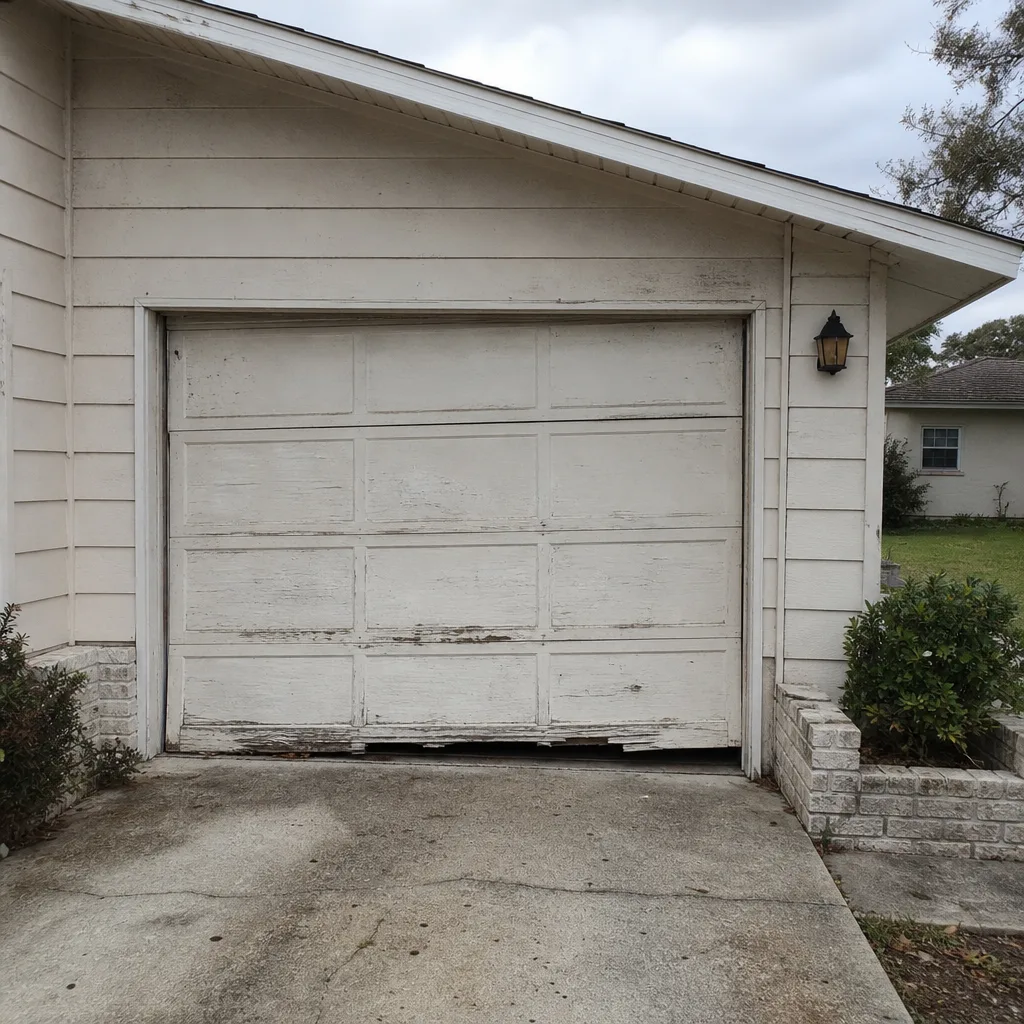 Before
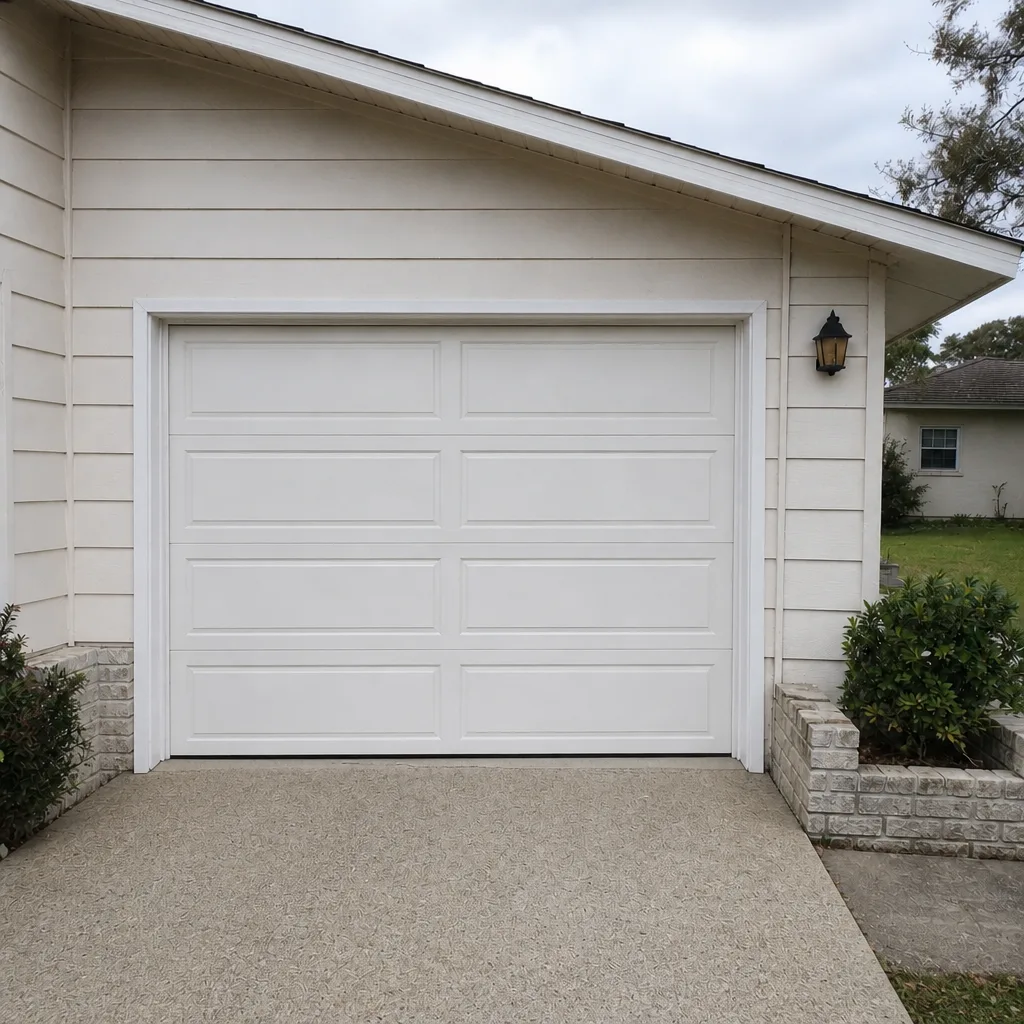 After
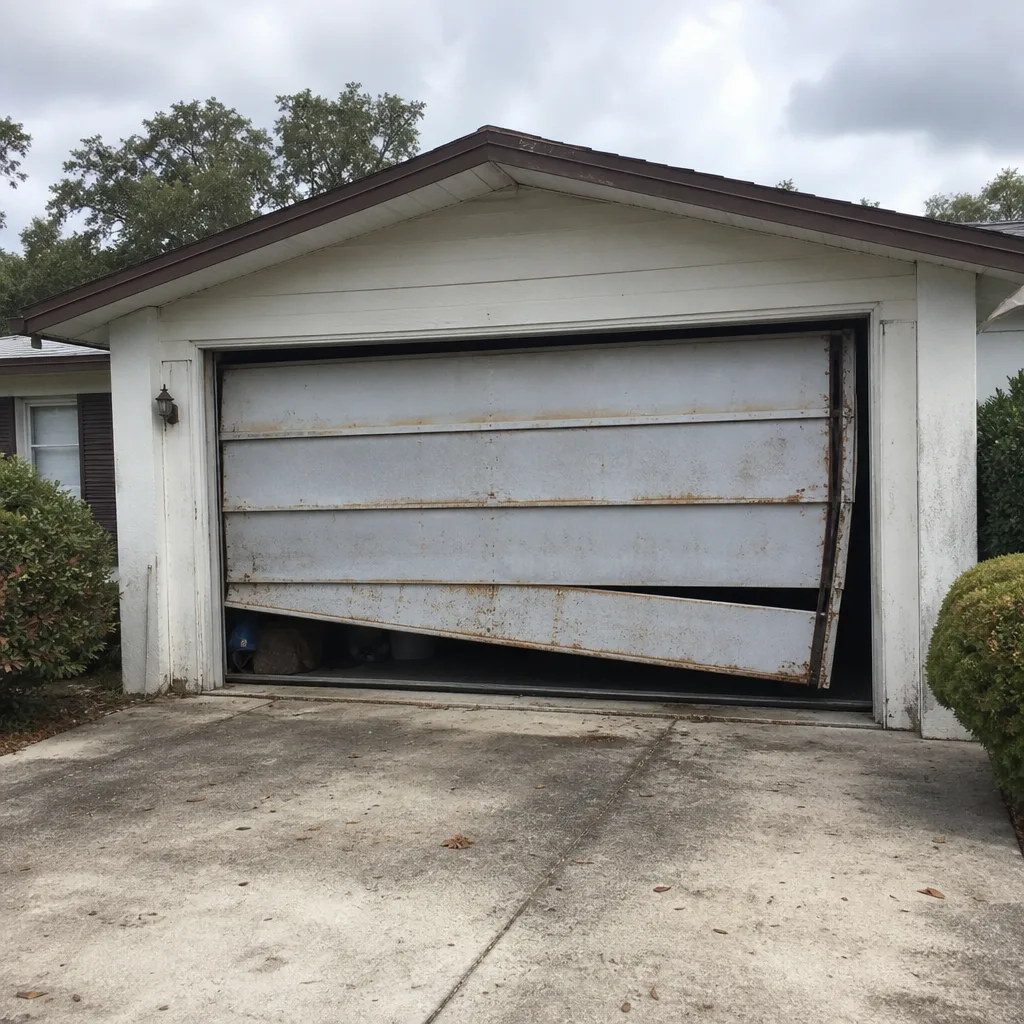 Before
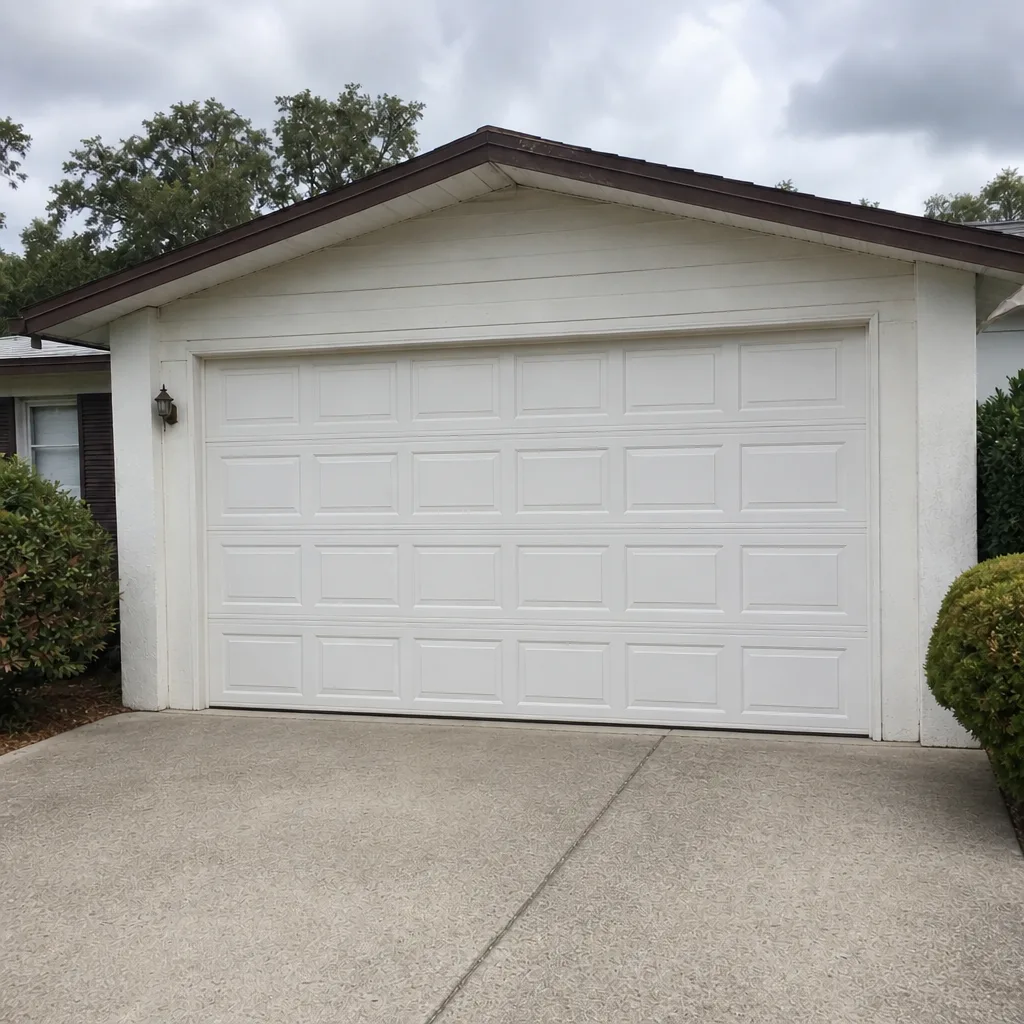 After
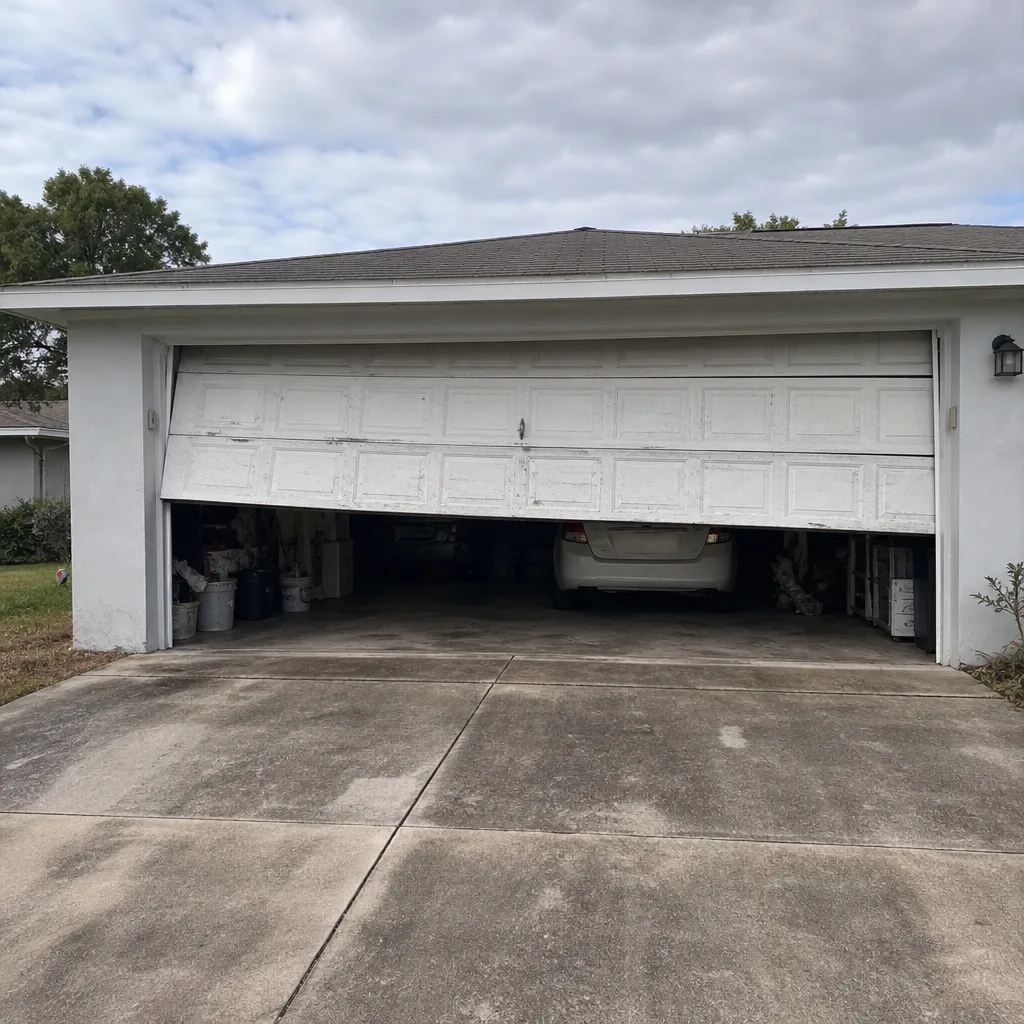 Before
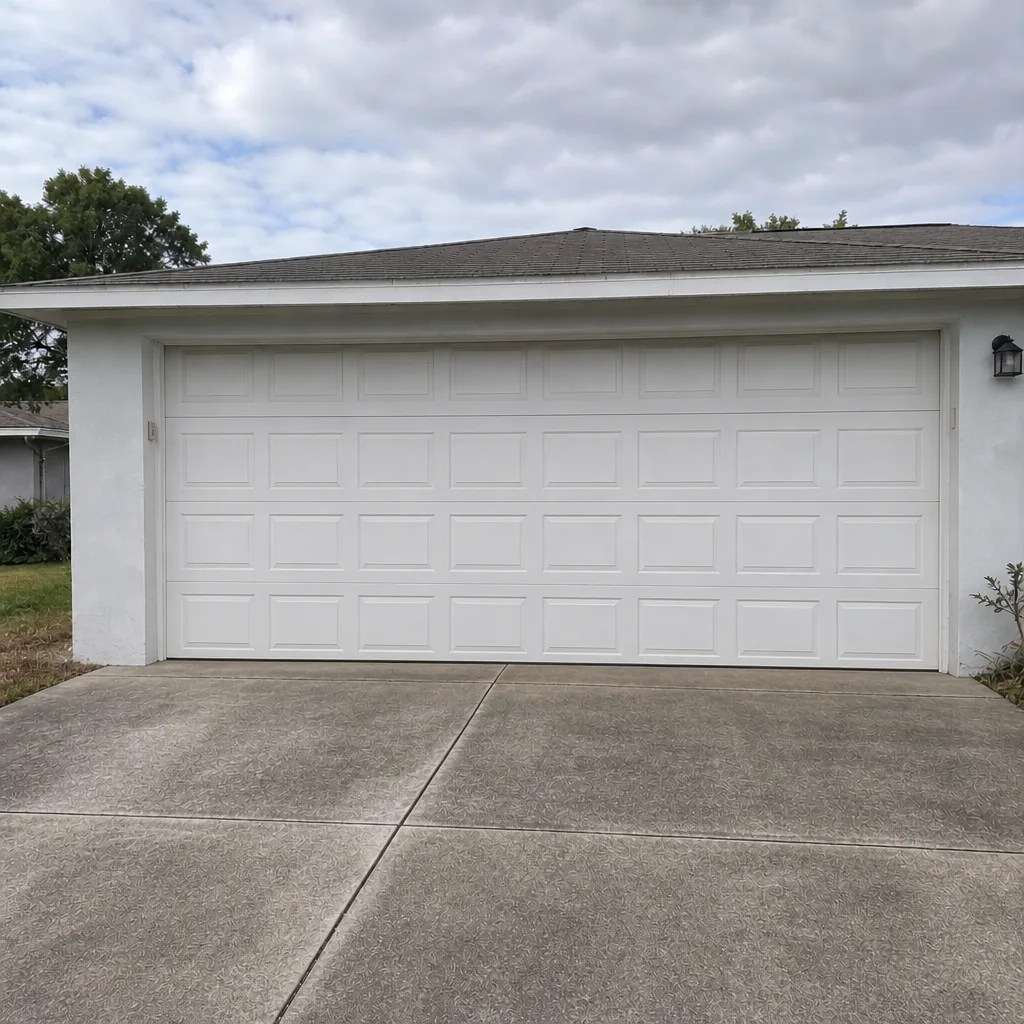 After
When to Call a Professional
Call a professional when the job crosses into anything structural, anything involving springs or cables, or anything that changes the door’s rated performance. If the door is coming out and a new one is going in, that’s a permit job and an installer job together. If a spring has snapped, the door won’t lift, and the car is stuck inside, that’s a spring call, and it’s dangerous to attempt yourself. If you’re not sure whether your job needs a permit, that’s a phone call worth making before work starts, because the answer decides how the job gets scheduled. We service LiftMaster, Chamberlain, Genie, Clopay, Amarr, Wayne Dalton, Craftsman, and Raynor equipment, and we handle repair, spring work, opener repair, and full installation under one roof. Sun City Center Garage Door Repair offers free estimates in Sun City Center. Call (855) 658-4128 to talk through your job.
Frequently Asked Questions
In most cases, yes. Hillsborough County generally treats a full garage door replacement as a structural alteration requiring a permit, while repairs to the existing door usually do not. Confirm with the county building department before any work starts, because the threshold depends on the specific job.
Permit fees vary by the job’s valuation and the county’s current fee schedule, so the exact cost has to come from the building department at intake. Ask for the fee when you call to confirm the requirement. Call (855) 658-4128 for a free estimate on the installation side, so you can see the full picture together.
The inspector verifies that the door installed on the house matches the permitted specification, including its wind-load rating and the anchoring and hardware the rating depends on. If the installed door matches the paperwork, the inspection is quick. If it doesn’t, you get a correction notice and a follow-up visit.
Size alone doesn’t determine the answer. A like-for-like replacement is still a replacement, and the county generally wants the new door’s wind-load rating documented. Call the building department and describe the job in plain terms rather than assuming a same-size swap is exempt.
Usually not. An opener replacement on a door that stays in place is repair, not structural alteration, so it typically falls outside the permit threshold. If the opener work comes with a new door or a change to the framing, that’s different, and the county should be consulted.
The buyer’s inspection can surface the missing permit, and the closing can be delayed while it’s resolved. The fix is a retroactive permit with the door documented and inspected. It’s far easier to handle before listing, so pull the permit history on your address early. Call (855) 658-4128 and we’ll inspect the door and tell you what you’re working with.
The Bottom Line
A garage door replacement in Sun City Center is a permit job, and a repair usually isn’t. That single distinction is the one that matters most. The permit exists to confirm the new door meets Florida’s wind-load requirements and was installed the way its rating assumes. The closed permit, the product approval, and the invoice are the documents your insurer and your buyer will want. If you’re facing a replacement, budget the permit and inspection into the job from the start. If you’re facing a repair, spring or opener, you can skip the paperwork and call us directly. Either way, get the answer before work begins. Call (855) 658-4128 for a free estimate in Sun City Center.
Written by the team at Sun City Center Garage Door Repair.