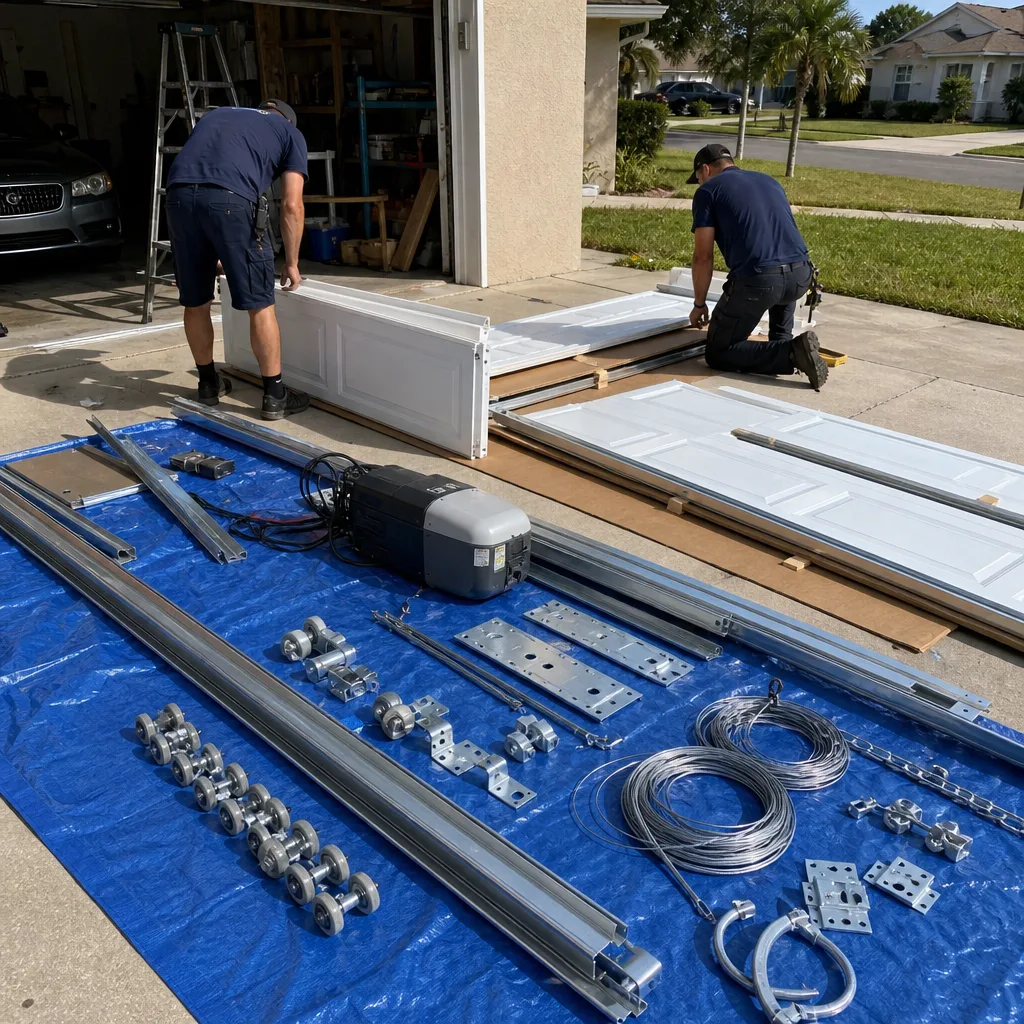
Last updated November 23, 2026
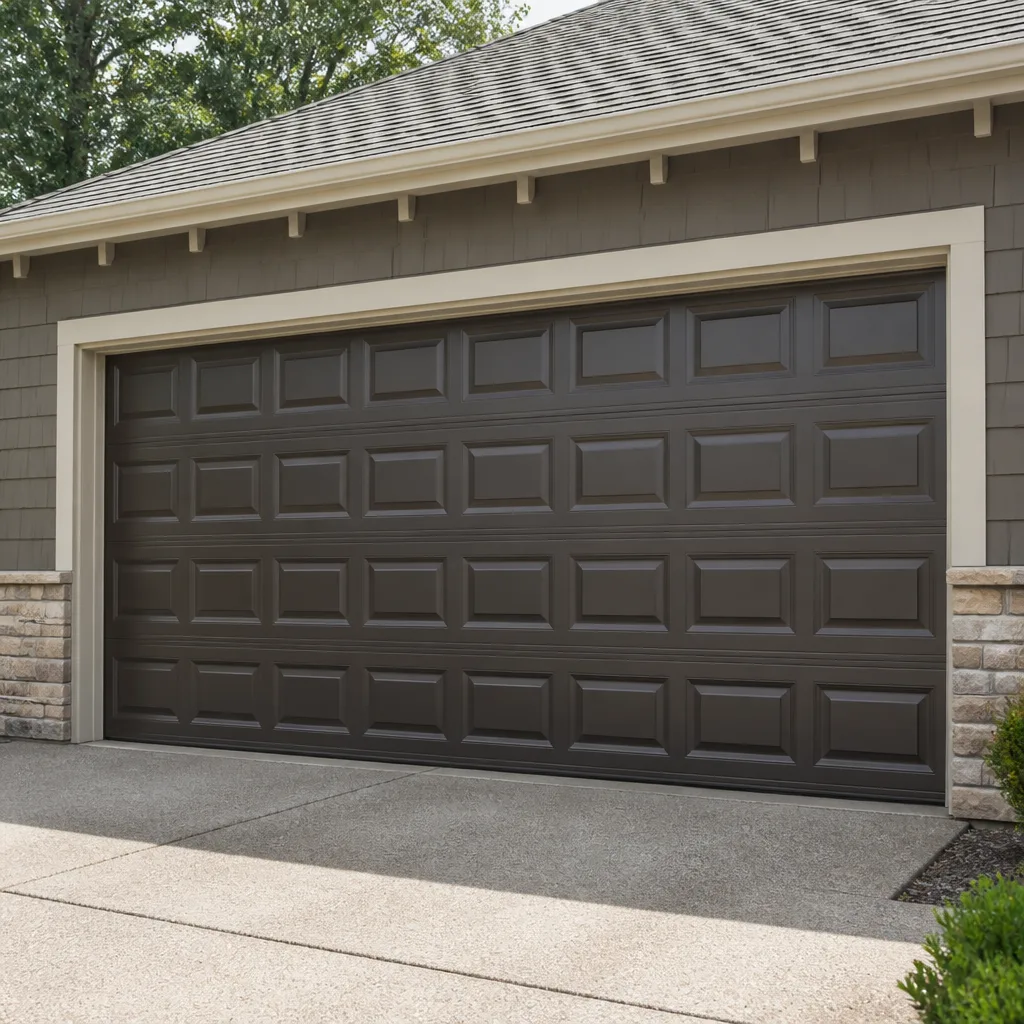 Raised-panel steel
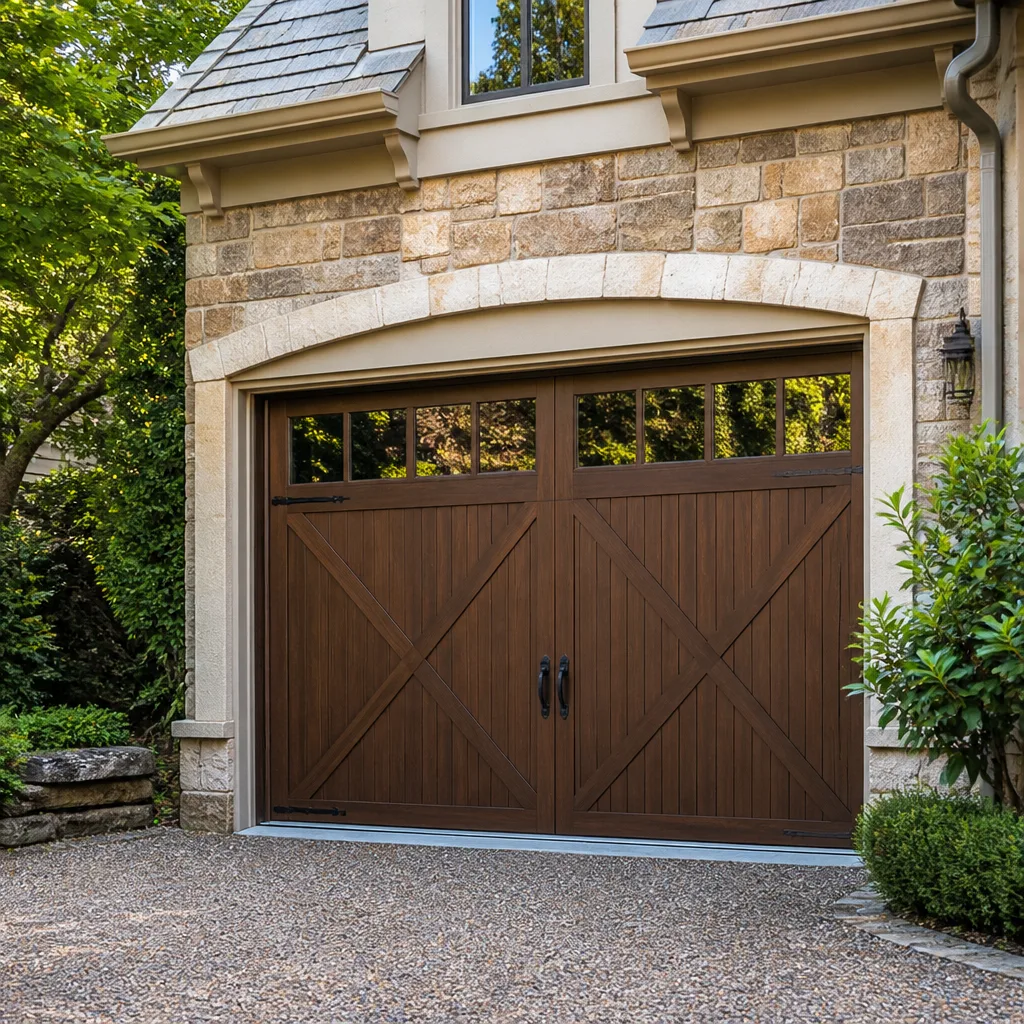 Carriage house
 Modern flush
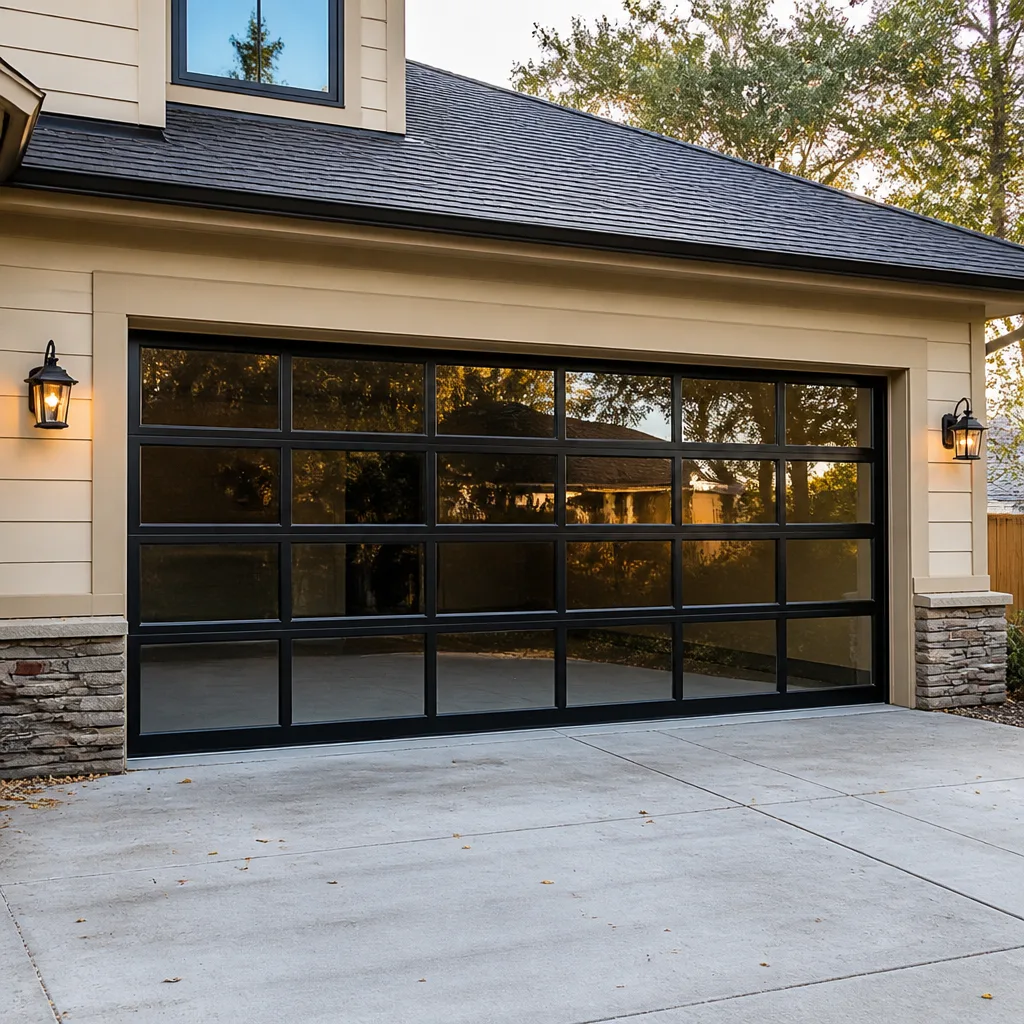 Full-view glass
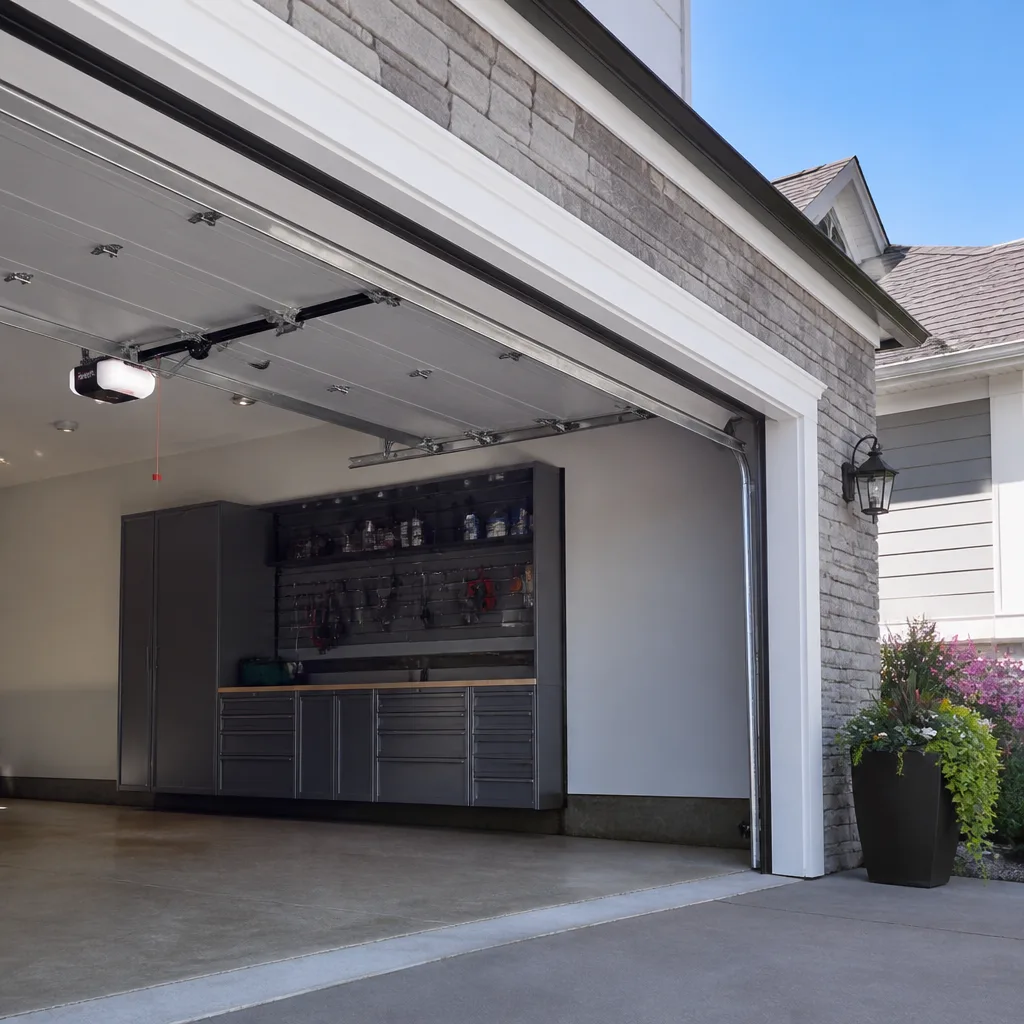 LiftMaster openers
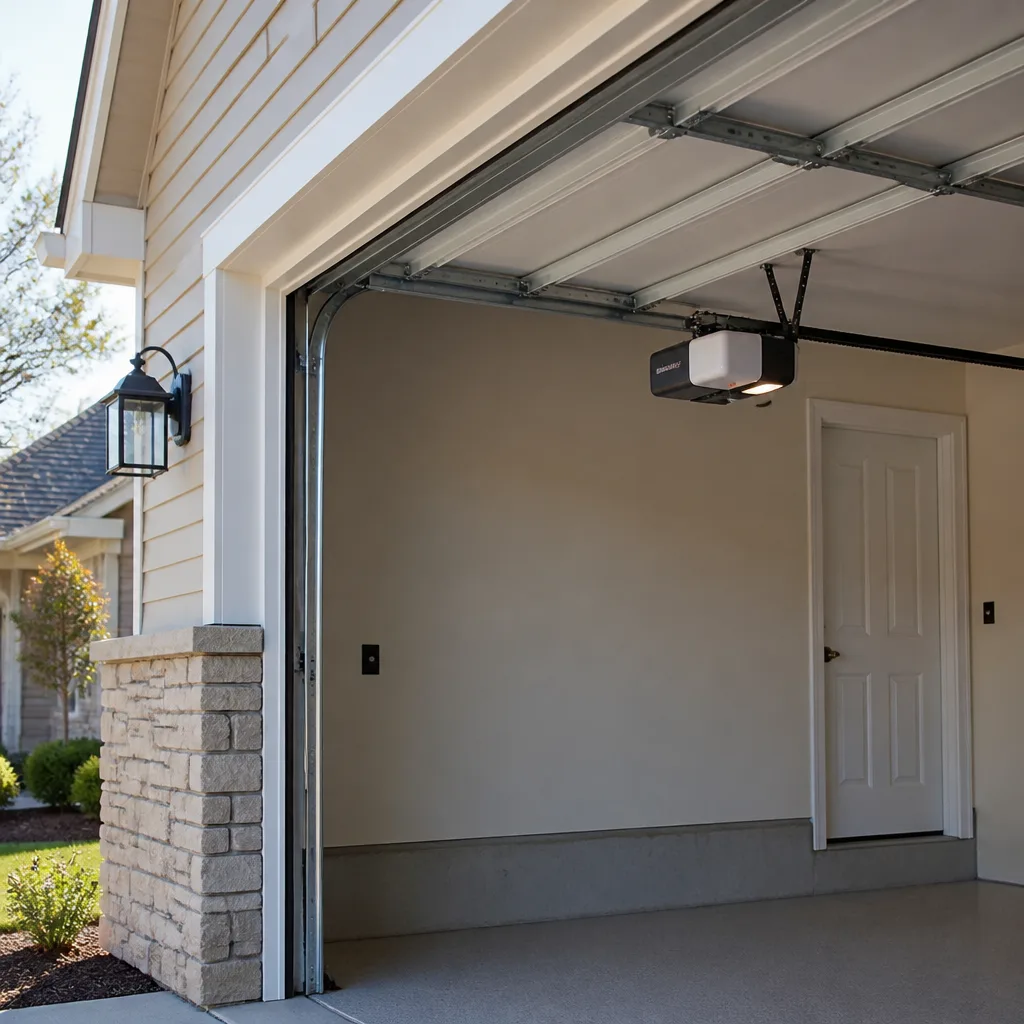 Chamberlain openers
Full 25-point door and opener safety check with every visit - springs, cables, rollers, tracks, and your LiftMaster or Chamberlain opener included
You get a price before we start. It does not change when the pro arrives.
Get your free estimateThe Complete Guide to Garage Doors in Sun City Center
A garage door that looks fine can still be a door on borrowed time. That’s the counterintuitive truth most homeowners here miss: the panels and paint often outlast the machinery behind them by years. Most homes in Sun City Center went up between the 1970s and the 1990s, which means the springs, tracks, rollers, and openers on a great many of those homes are working past their expected service life even when the front of the door looks perfectly presentable. This guide walks through how Sun City Center’s Gulf Coast humidity, active-adult HOA covenants, and retirement-era construction shape what your door actually needs – and how to hold an informed conversation with any technician who shows up at your curb.
Quick Answer
Garage door care in Sun City Center comes down to three local realities: the humidity along the Gulf Coast belt ages galvanized hardware faster than most homeowners expect, HOA covenants in active-adult communities restrict door styles, colors, and replacement timelines, and homes built between the 1970s and 1990s often carry torsion spring systems undersized for the heavier insulated doors people want today. Address those three things and you avoid most of the surprise repairs that catch people off guard.
Styles & brands we work with
- Raised-panel steel
- Carriage house
- Modern flush
- Full-view glass
- LiftMaster openers
- Chamberlain openers
Table of Contents
- How Sun City Center HOA Covenants Affect Your Door
- Why Retirement-Era Hardware Ages Faster Than the Door
- The Corrosion Timeline in Hillsborough County’s Humidity Belt
- Undersized Springs on Pre-2000 Sun City Center Homes
- Choosing an Opener for Frequent Daily Use
- How to Inventory Your System Before You Call
- Repair or Replace? A Decision Guide
- Safety First: What You Should Never DIY
How Sun City Center HOA Covenants Affect Your Door
Sun City Center is an active-adult community, and that changes the garage door conversation in ways a general contractor from outside the area won’t anticipate. HOA covenants in this kind of community commonly govern door style, panel design, color, and the timeline you have to correct a non-compliant door after it’s flagged. Before you sign any installation contract, read your community’s architectural rules and pull the current approved-color list. It’s a step that takes ten minutes and can save you a redo.
What the covenants typically touch:
- Style and panel design: Some associations require a specific raised-panel or carriage-house look and prohibit certain contemporary flush designs.
- Color: Approved palettes are usually narrower than the full manufacturer range. A door color you love may not be on the list.
- Windows and inserts: Decorative window rows sometimes need approval just like a full color change.
- Replacement timeline: If a door is flagged as non-compliant or deteriorated, there’s usually a window to correct it.
- Material: Some communities restrict steel versus wood-look or composite options.
The practical move: get written HOA approval before ordering. Manufacturers like Clopay and Amarr publish color and style sheets you can bring to your board, and a technician who works in Sun City Center regularly will already know which configurations tend to clear approval here. If you’re unsure where to start, our Sun City Center garage door repair team can walk you through what’s typically approved before you commit to a style.
What to Bring to Your HOA
- The manufacturer’s spec sheet for the exact door you want, including panel profile and color code.
- A photo or rendering of the door on a home similar to yours in the community.
- The color sample chip, not just a printed image, since screens distort color.
- Any contractor paperwork showing the installer is licensed and insured as their state requires.
Do this before the door is ordered, not after it’s hung. Reversing an installed door is expensive, and the association won’t bend the rule just because the door is already up.
Why Retirement-Era Hardware Ages Faster Than the Door
Here’s the pattern we see repeatedly across Sun City Center: the door face holds up well, but the hardware behind it is decades into its service life. A steel door from the 1980s can still look decent after a repaint, while the springs, rollers, cables, and hinges that make it move have been cycling thousands of times a year for more than thirty years. The door’s appearance lies about its mechanical health.
Springs are the clearest example. A torsion spring is rated for a finite number of cycles, and every open-close is one cycle. A household that uses the garage as its main entry point – which is common here, where the garage leads straight into the home – runs the door two, four, even six times a day. Over a couple of decades that’s a staggering cycle count, and the spring metal fatigues whether or not it looks rusty.
What typically wears out first on a 1970s-to-1990s Sun City Center home:
- Torsion and extension springs: fatigued long before the door shows its age.
- Nylon and steel rollers: flat-spotted and noisy, dragging on the track.
- Hinges: loosened at the screw holes, causing panel sag.
- Cables: frayed or stretched, especially on older extension-spring setups.
- Openers: original chain-drive units that have outlived their designed life by a wide margin.
The lesson is simple: judge the door by its moving parts, not its paint. If your home dates to that era and you’ve never had the hardware serviced, assume it’s due for a look. Our garage door repair work in this community is often less about fixing a sudden failure and more about catching worn parts before they strand a car.
The Corrosion Timeline in Hillsborough County’s Humidity Belt
Hillsborough County sits in a humid Gulf Coast climate, and that humidity changes how fast garage door hardware corrodes compared with drier parts of the country. Galvanized steel components – springs, tracks, hinges, and the bottom brackets – are protected by a zinc coating, but that coating does not last forever in persistent moisture. The garage, often the least ventilated space in the house, traps humid air against every metal surface.
A rough timeline of what humidity does to unprotected hardware:
- First couple of years: the zinc coating holds; hardware looks new.
- Around years three to five: the coating begins to thin at edges, welds, and screw holes where it’s thinnest.
- Middle years: surface rust appears on hinges, the bottom bracket, and the ends of the torsion shaft; rollers start to stick.
- Later years: pitting sets in on neglected tracks, cables fray more easily where moisture has crept under the jacket, and moving parts seize.
The exact timeline varies with ventilation, whether the door faces the afternoon sun, and how often the door cycles. But the direction is always the same: hardware here ages toward rust faster than a homeowner expects. That’s why we recommend a yearly inspection that specifically looks at the bottom bracket, the hinges, and any bare metal on the tracks – the spots humidity reaches first. Lubricating moving parts with a proper garage door lubricant keeps moisture off the metal and buys real time.
Rusted, dragging hardware is also a common reason an opener starts straining or a door stops reversing. If your door has gotten balky, our garage door opener repair team can tell you whether the problem is the motor or the corroded parts it’s fighting.
Undersized Springs on Pre-2000 Sun City Center Homes
This is one of the most overlooked problems in Sun City Center, and it’s specific to the era of the housing stock. Original torsion spring systems on homes built before 2000 were commonly sized for the lighter doors of the day – often non-insulated single-layer steel. When a homeowner later installs a heavier insulated door to cut heat gain and noise, the old springs are suddenly balancing more weight than they were ever rated for. The result is a door that feels heavy, wears its opener hard, and runs through springs faster than it should.
How to tell if your springs may be undersized for your door:
- The door is noticeably heavy when you lift it by hand with the opener disconnected.
- The door doesn’t stay put when you lift it partway – it drifts down instead of holding.
- The opener strains, heats up, or reverses on the way up.
- The springs are original to a home built before 2000 and the door has since been replaced.
- The door slams down hard at the bottom of travel.
Getting the spring right is a calculation, not a guess. The correct spring is matched to the door’s exact weight and height, and the wrong one either leaves the door unbalanced or overloads the opener. This is the single most safety-critical piece of garage door machinery in the home – torsion springs store enormous energy and can cause serious injury if handled wrong. If your system is suspect, leave it to trained hands. Our garage door spring repair work centers on sizing the spring to the actual door, not swapping in a lookalike.
What We Check on a Spring Call
We weigh the door, measure the height and track type, note whether the system is torsion or extension, and check the drum and cable condition before quoting. That’s how a spring gets sized correctly the first time. You agree the price before any work begins, and the written estimate sets the final number.
Choosing an Opener for Frequent Daily Use
Many Sun City Center homeowners use the garage as their primary entry, coming and going several times a day. That changes which opener features actually matter. The right opener for a door you use five times a day is not the same as the right opener for a door you open twice a week. Durability under frequent cycling, quiet operation, and reliable safety features should drive the decision – not the longest feature list.
Features that matter for a high-traffic door:
- Duty rating: a heavier-duty motor handles frequent cycles without overheating.
- Belt versus chain drive: belt drives run quieter, which matters if there’s a bedroom or living space above the garage.
- Safety reversal and photo-eye sensors: non-negotiable, and they need to be tested monthly.
- Battery backup: useful when the power goes out and you need to get the car out.
- Smart connectivity: remote monitoring and alerts are handy if you’re away for the season or managing a rental property.
Brand matters less than fit. We work on the major opener platforms – LiftMaster, Chamberlain, Genie, and Craftsman among them – which means we diagnose by knowing the system rather than guessing at it. A Genie with a worn logic board and a LiftMaster with a failed travel module don’t fail the same way, and knowing the difference saves a return trip. When your opener is ready for replacement, we can supply the full door-and-opener system so you’re not handing the job to a third party mid-stream.
How to Inventory Your System Before You Call
The most useful thing you can do before calling anyone is a five-minute inventory of your current system. It turns “my door is acting up” into a specific description a technician can act on, and it lets you have an informed conversation rather than nodding along. None of this involves touching the springs or taking anything apart.
- Note the door type and material: steel, wood-look, or composite; single or double car; insulated or not.
- Identify the spring system visually: a horizontal shaft above the door with wound springs means torsion; springs running along the horizontal tracks means extension. Don’t touch them – just look.
- Read the opener label: brand, model, and manufacture date are usually printed on the motor housing or the wall control.
- Listen to the door: a grinding, squealing, or banging sound tells a technician a lot before they arrive.
- Test the safety reverse: put a small object in the door’s path and confirm it reverses. If it doesn’t, that’s a priority call.
- Check the balance: with the door closed and the opener disconnected (following the manual’s release procedure), lift it partway. It should hold. If it drops, that’s a spring or balance issue.
Write it down or snap a photo of the opener label. If your door is failing and you need emergency service, we’re reachable for exactly that – a broken spring or a stuck door is an access and security problem, not just an annoyance. If it’s a standard repair, we book it and confirm the price up front. For installations and replacements, the work is measured, ordered, and scheduled, so a free measure and a written price come first.
Repair or Replace? A Decision Guide
The repair-or-replace question comes down to the door’s overall condition, not just the part that failed. A single worn roller or a tired opener is a repair. A door with sagging panels, rusted-through sections, and original hardware on a home from the 1980s is usually a replacement conversation. Use the guide below as a starting point.
| Situation | Usually Repair | Usually Replace |
|---|---|---|
| One spring fails, door otherwise sound | Yes – replace the spring (often as a matched pair) | No |
| Opener dies, door in good shape | Yes – new opener | No |
| Panels sagging or rusted through | Rarely | Yes |
| Door won’t stay balanced after adjustment | Depends on cause | If sections are warped |
| Original hardware on a pre-2000 door with a newer heavy door | No – full re-spring and hardware refresh | Often, especially with HOA style needs |
| Cosmetic refresh only | Paint or hardware swap | Only if structure is compromised |
One more local wrinkle: if your door is already aging out and the HOA is nudging you toward a compliant style, a replacement solves two problems at once. That’s a conversation worth having with a technician who knows both the mechanical side and the covenant side. A free measure and written estimate, with the price agreed before any work starts, keeps the decision in your hands.
Safety First: What You Should Never DIY
Some garage door jobs are reasonable DIY – lubricating rollers, tightening a loose hinge, replacing a light bulb in the opener. Others belong to trained professionals, full stop. The most dangerous component is the spring system. Torsion springs and the cables that run with them store and release tremendous force, and a mistake can cause serious injury. Extension springs under load are just as hazardous. No guide, video, or online tutorial makes that work safe for someone without training and the right tools.
What we recommend you never attempt yourself:
- Replacing torsion or extension springs, or cutting or adjusting the cables attached to them.
- Adjusting the torsion shaft, drums, or cable tension.
- Repairing or bypassing the opener’s electrical wiring or safety sensors to make a door close.
- Working on a door while it’s under spring tension or with the opener still engaged.
- Climbing on a stepladder directly under an open door that isn’t balanced.
A real expert flags the danger rather than dancing around it. If your door is stuck open or closed, or you hear a bang and the door won’t move, treat it as a safety issue and call a professional. We handle spring work as a core service because many generalists won’t – and because it’s exactly the job that calls for someone who does it every day.
Common Mistakes to Avoid
- Ordering a door before checking HOA approval. Color and style rules in Sun City Center communities are specific, and an installed non-compliant door means paying twice. Get written approval first.
- Replacing one spring when the pair is due. Matched springs are installed together and fail close together. Swapping one leaves the other on borrowed time and the door unbalanced. Plan for the pair.
- Ignoring rusty hardware because the door still opens. In Gulf Coast humidity, corrosion creeps under the zinc coating long before the door stops working. By the time it seizes, you’ve stressed the opener and the cables too.
- Putting a heavy insulated door on original lightweight springs. On pre-2000 homes, the old springs were sized for a lighter door. A heavier door without a re-spring overloads the opener and shortens spring life.
- Over-lubricating tracks. Rollers and hinges want lubricant; the track itself should stay clean. Grease on the track collects grit and causes the door to drag.
- Disconnecting the safety reverse to force the door closed. That sensor is the door’s main protection against a person or object being caught. If it’s not working, that’s a repair, not an inconvenience to override.
- Choosing an opener on feature count alone. A door used several times a day needs a duty rating that keeps up. The longest feature list doesn’t help a motor that overheats.
See the difference
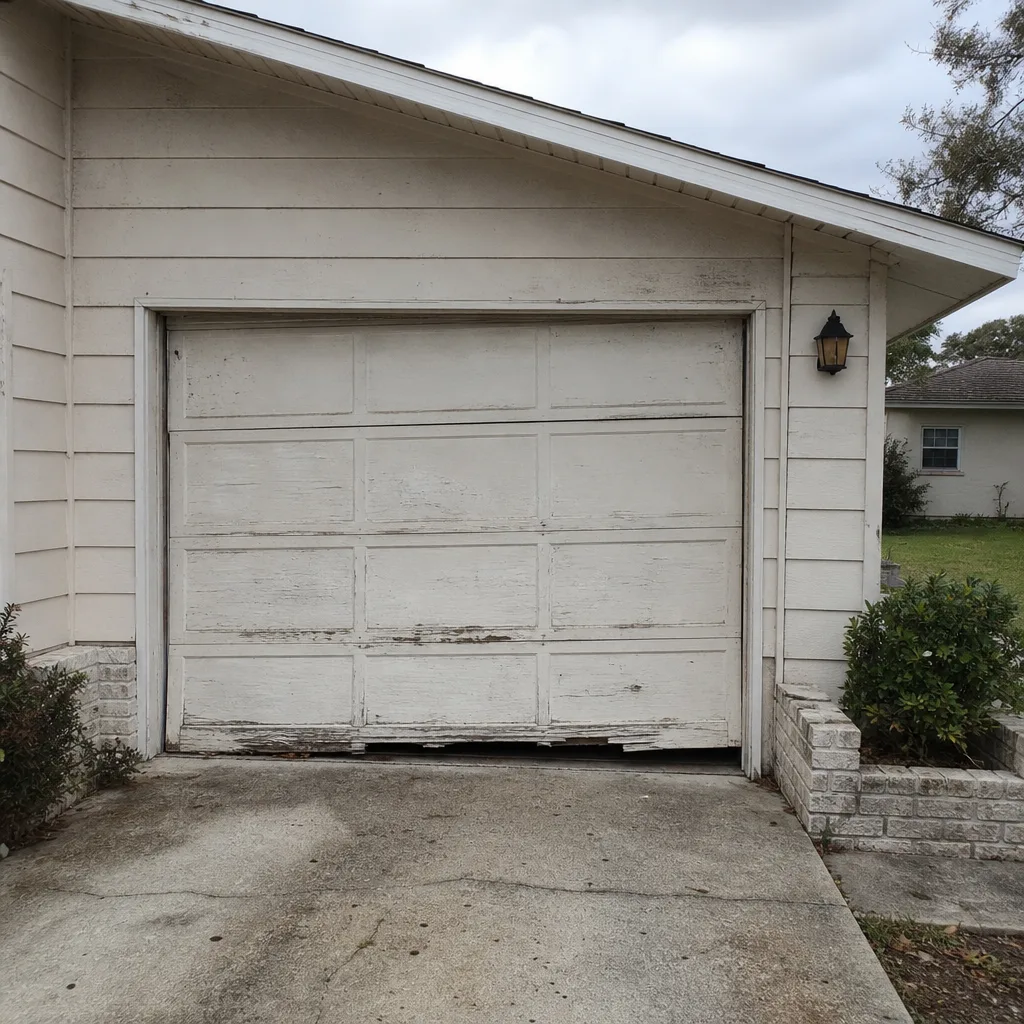 Before
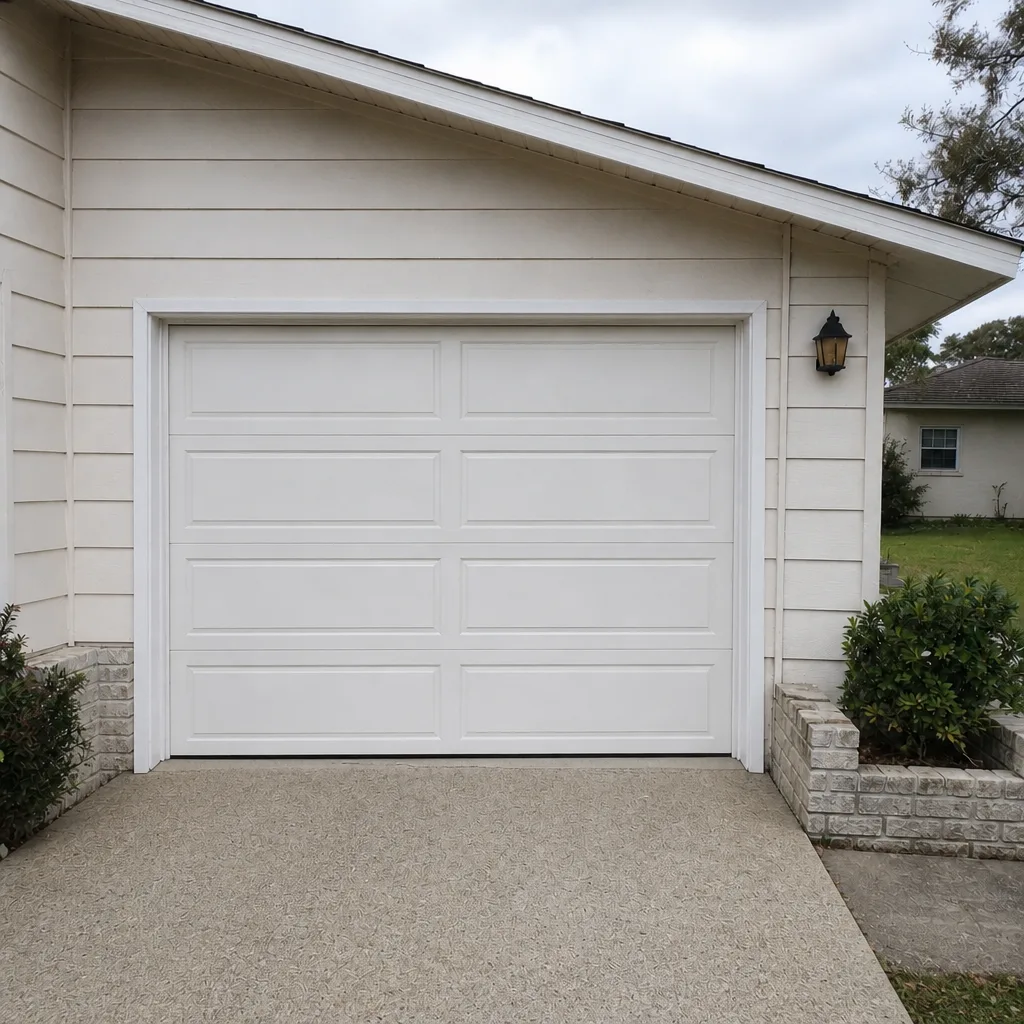 After
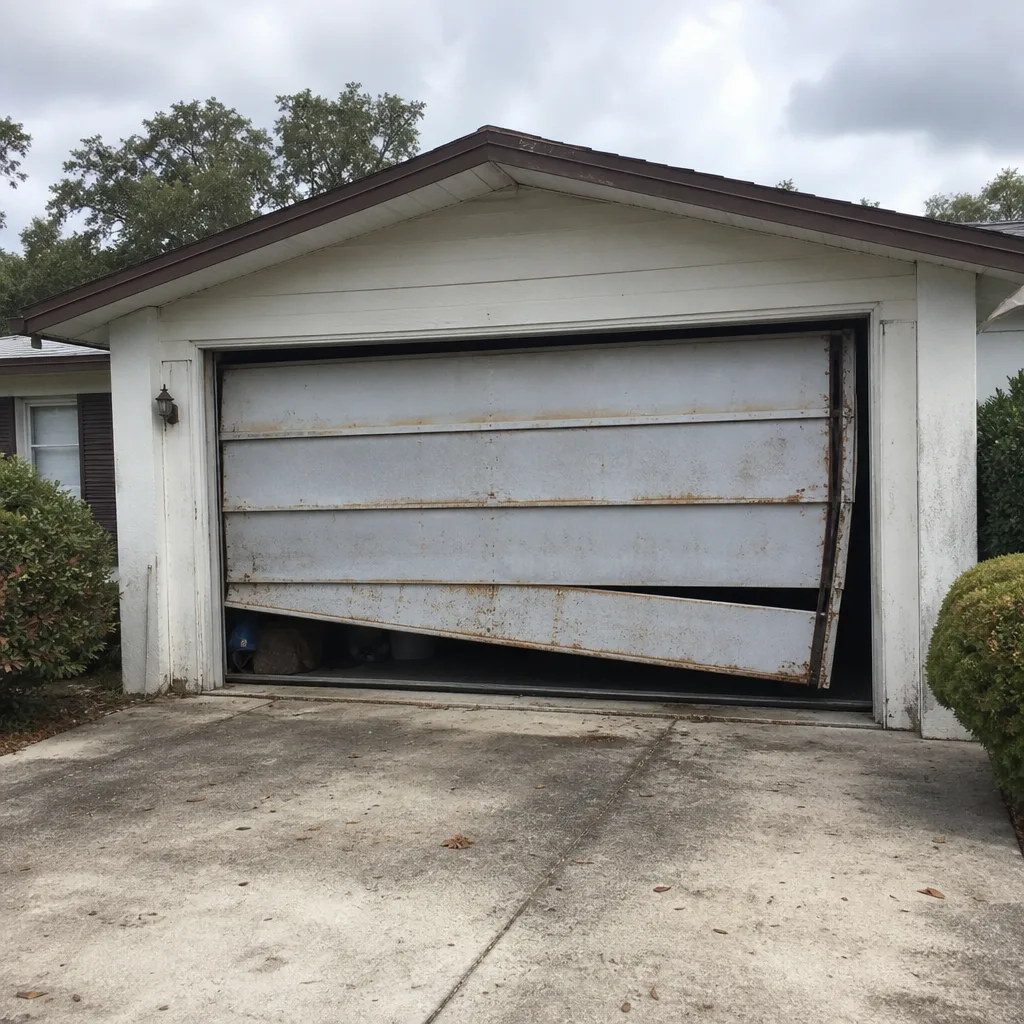 Before
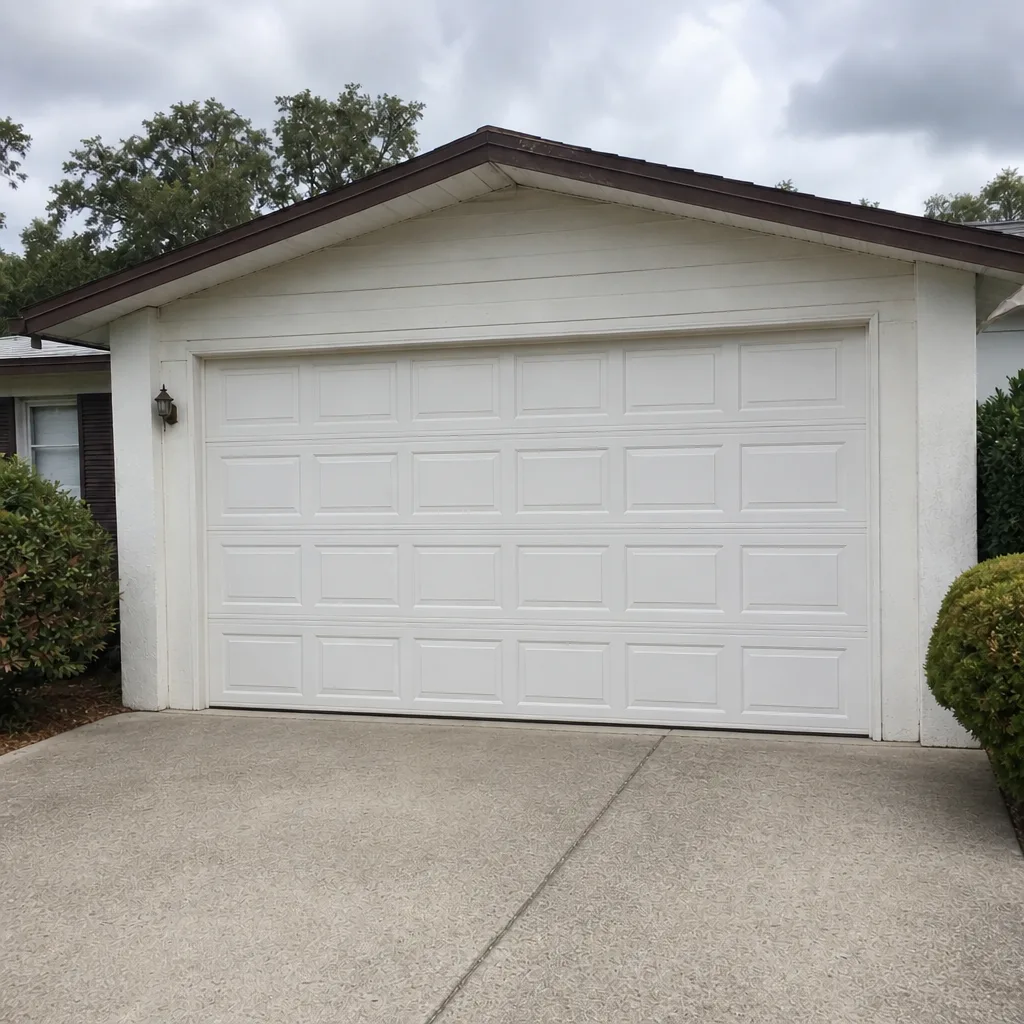 After
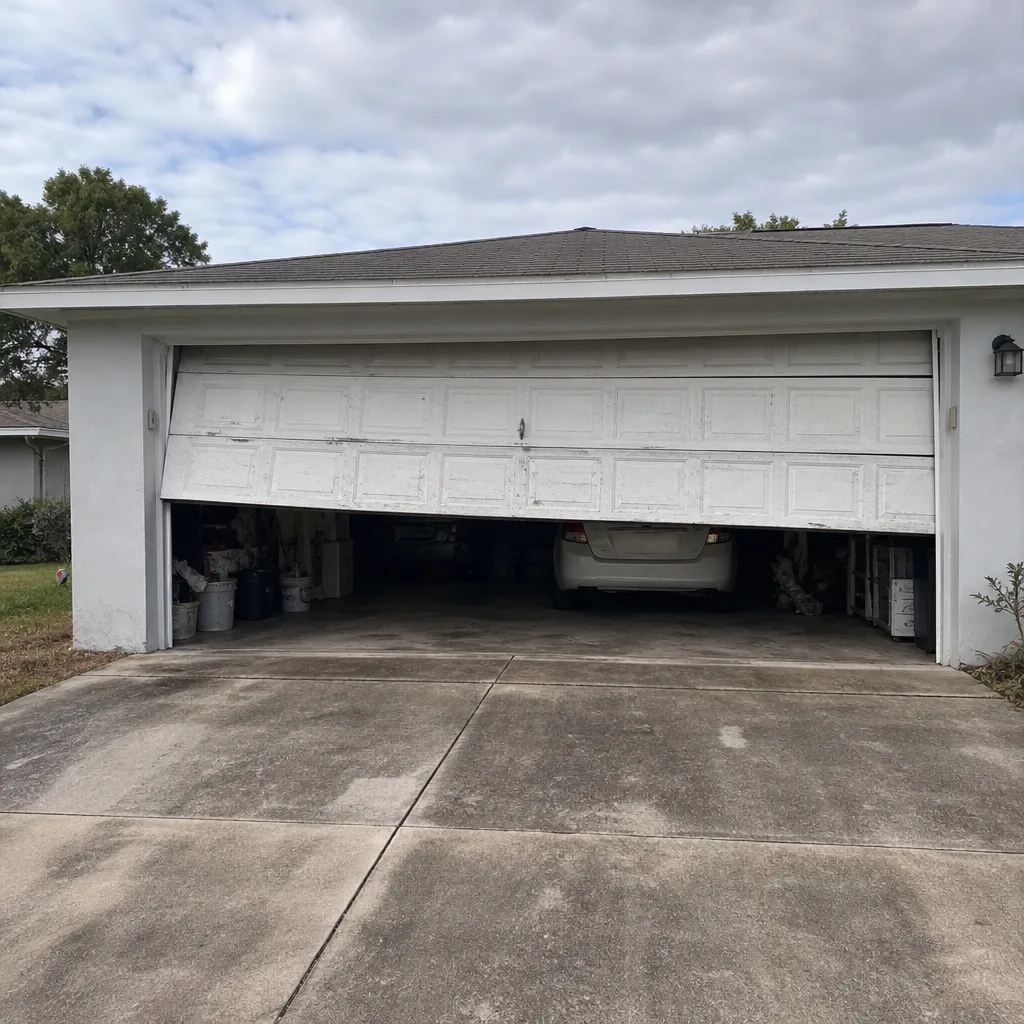 Before
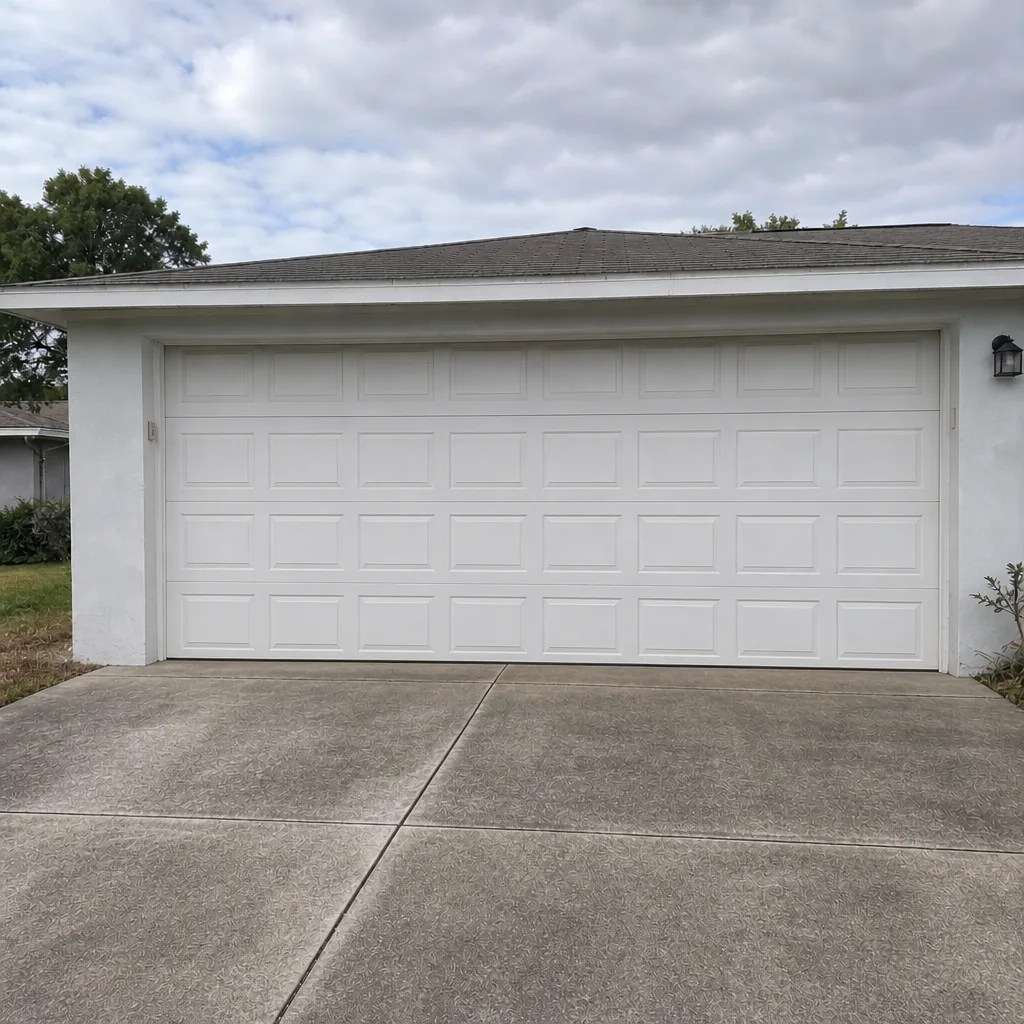 After
When to Call a Professional
Call a professional when the door is stuck, off its track, or won’t reverse, when you hear a bang from the spring area, or when the door feels heavy and won’t hold when you lift it. Call before you attempt spring or cable work – always. And call when your pre-2000 Sun City Center home has original hardware and you’re planning a heavier door, because the spring and opener need to be matched to it. Sun City Center Garage Door Repair offers free estimates in Sun City Center – call (855) 658-4128. We work on the major brands, from Genie openers to Wayne Dalton doors, and we quote and agree the price before any work starts so there are no surprises on the invoice.
Frequently Asked Questions
Replace the door when the panels are sagging, warped, or rusted through, or when original hardware on a pre-2000 Sun City Center home can no longer balance a heavier door. If a single part failed and the door is otherwise sound, it’s a repair. A free measure and written estimate will show you the difference in cost before you decide.
It depends on your community, so check your covenants and approved-color list before ordering. Many Sun City Center associations restrict styles, colors, and even window inserts. Get written approval first, and bring the manufacturer’s color chip and spec sheet to your board.
We offer emergency garage door service for exactly that situation, including doors stuck open or closed. Call (855) 658-4128 and we’ll book you in. A broken spring or stuck door is an access and security problem, so it’s worth calling rather than waiting.
No. We quote and agree the price before any work starts, and the written estimate sets the final number. If we find something additional during the job, we talk it through with you before doing anything further.
Once a year is a good baseline in Hillsborough County’s humid climate, with a closer look at the hinges, bottom bracket, and bare metal tracks. Frequent humidity ages galvanized hardware faster than drier climates, so a yearly inspection catches corrosion before it seizes a door.
The local professionals we connect you with are licensed and insured as their state requires. Our technicians have up to 9 years of experience and work exclusively on garage doors, so they diagnose by system knowledge rather than guesswork.
The Bottom Line
Sun City Center’s garage doors need attention that fits the place: HOA covenants that shape what you can install, retirement-era homes whose hardware is older than their doors look, Gulf Coast humidity that ages galvanized metal faster than you’d expect, and spring systems that often need to be matched to a heavier modern door. Start with a five-minute inventory, check your HOA rules before ordering anything, and leave spring and cable work to trained hands. When you’re ready for a look, a quote, or an emergency call, we’re here. Written by the team at Sun City Center Garage Door Repair.
Written by the team at Sun City Center Garage Door Repair.
Ready to sort out your door? Call (855) 658-4128 for a free estimate – we’ll measure, quote, and agree the price before any work begins.