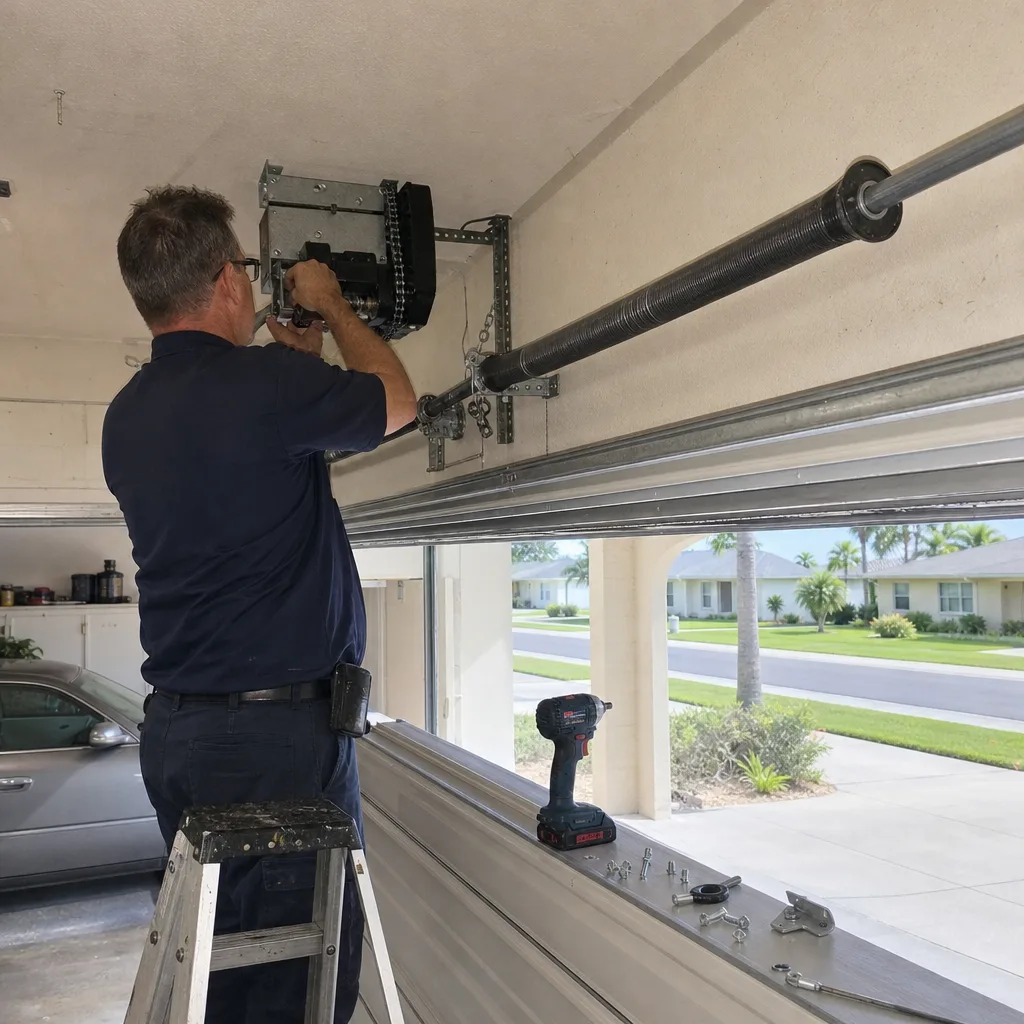
Last updated November 23, 2026
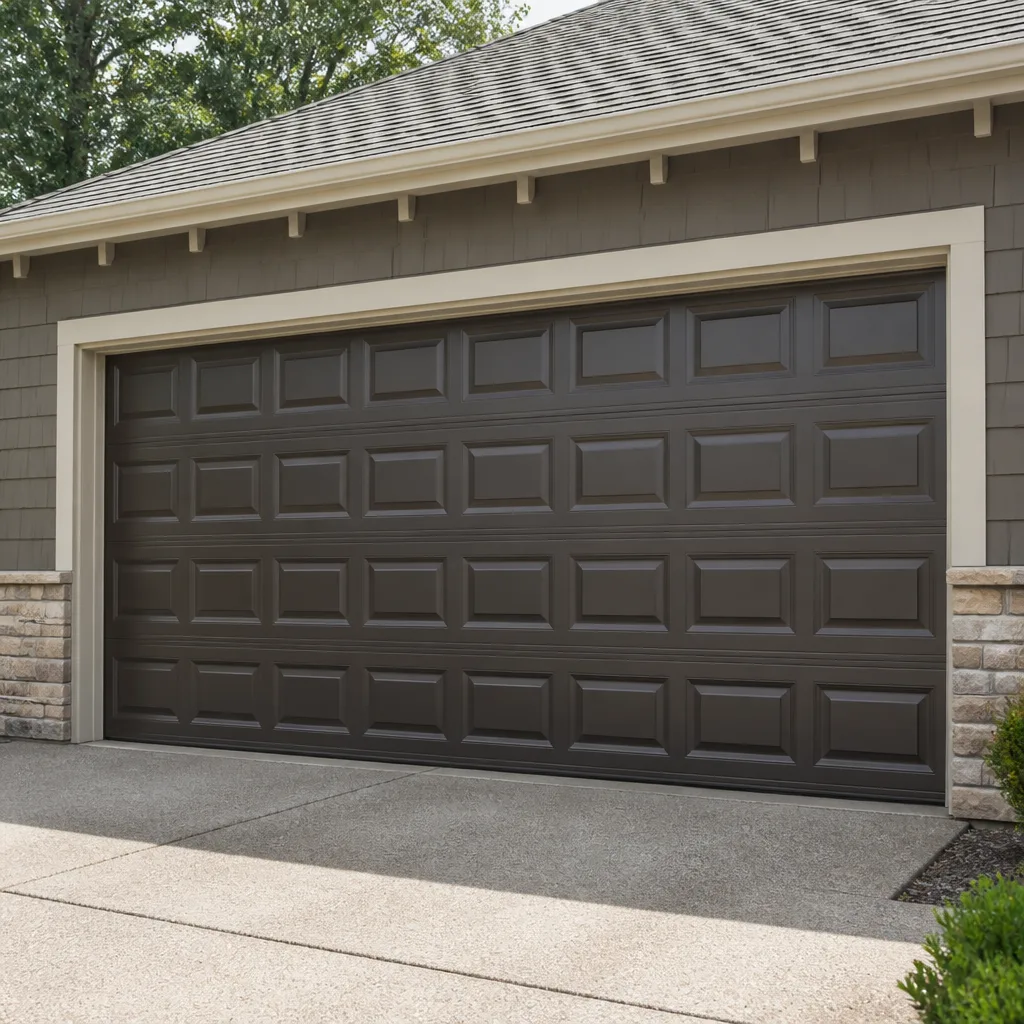 Raised-panel steel
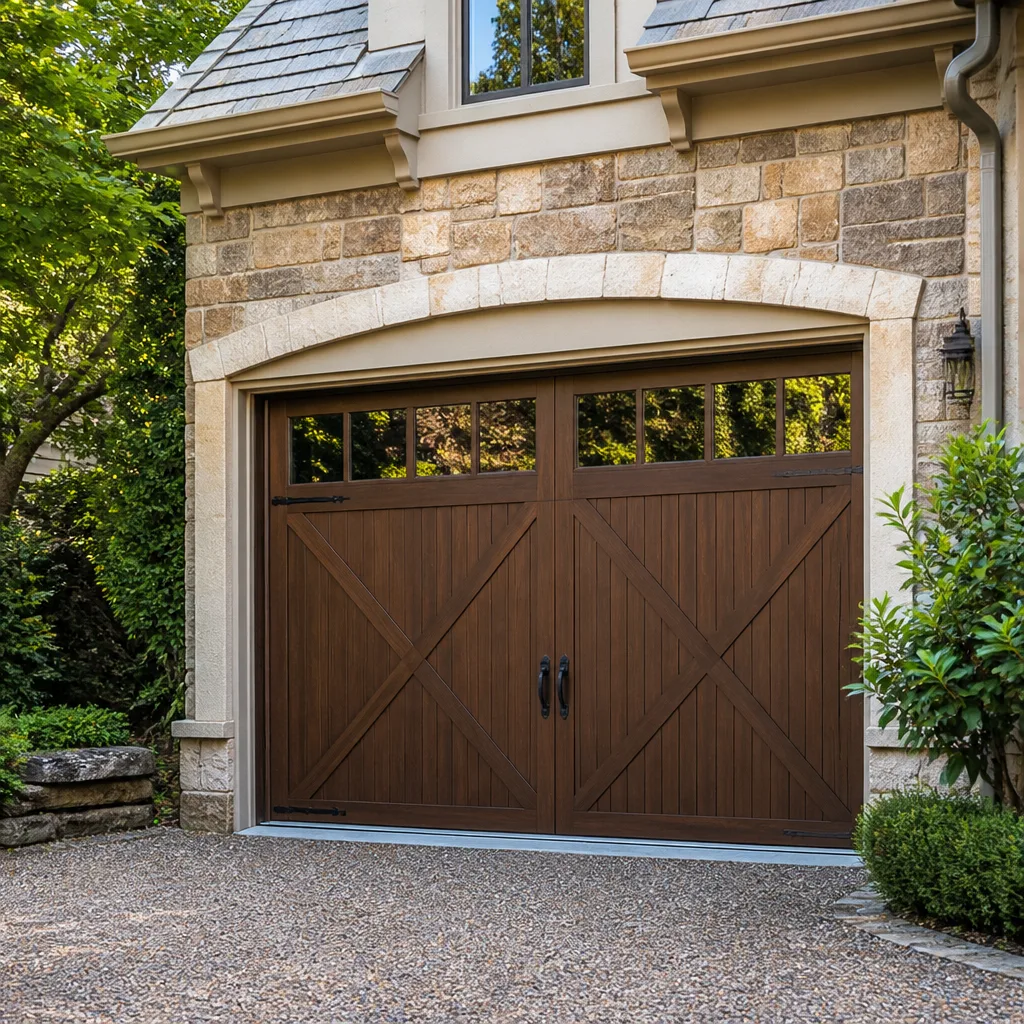 Carriage house
 Modern flush
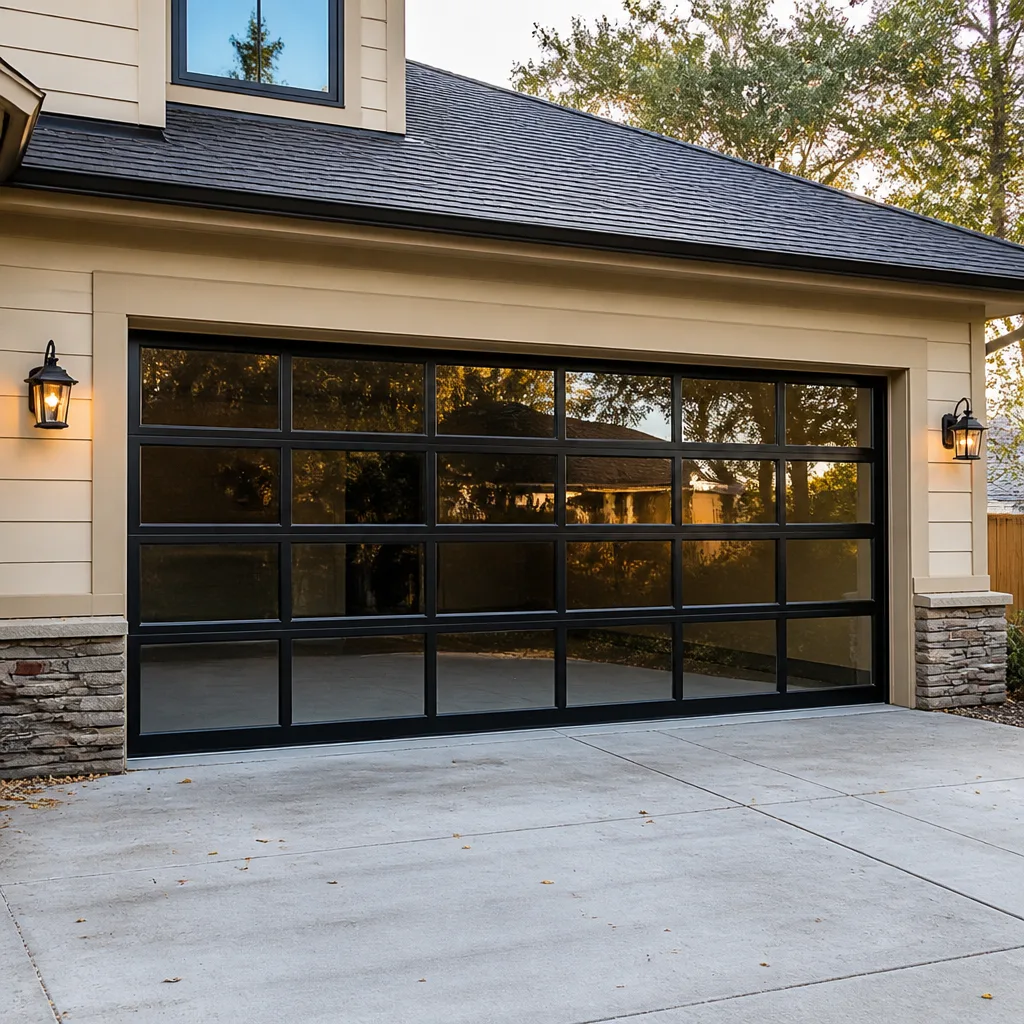 Full-view glass
 LiftMaster openers
 Chamberlain openers
Full 25-point door and opener safety check with every visit - springs, cables, rollers, tracks, and your LiftMaster or Chamberlain opener included
You get a price before we start. It does not change when the pro arrives.
Get your free estimateSeasonal Garage Door Care for Sun City Center: Year-Round Homeowner’s Guide
Most garage door maintenance advice assumes four seasons: a cold winter that freezes lubricant, a wet spring that rusts hinges, a hot summer, a crisp fall. Sun City Center doesn’t work that way. Our year has three real stress periods – hurricane season, peak heat, and a short cool-down – and each one breaks different parts of a door. A door that ran quietly in February can feel heavy and sluggish by August, and not because anything wore out. The heat alone changes how a torsion spring behaves. This guide walks through what each part of the year actually does to your hardware, what to check before it changes, and how to build a one-page calendar that fits Sun City Center instead of a generic quarterly checklist copied from a northern website.
Quick Answer
In Sun City Center, garage door care divides into three stress periods rather than four seasons: pre-hurricane preparation (focus on brackets, bottom seal and manual release), peak summer heat (when torsion springs lose tension and doors feel heavy), and the brief winter cool-down (when lubricant thickens and weatherstripping shrinks). Check the door once before each period, and leave spring and cable work to a trained technician – those parts are under extreme tension and cause serious injury when handled without the right tools.
Styles & brands we work with
- Raised-panel steel
- Carriage house
- Modern flush
- Full-view glass
- LiftMaster openers
- Chamberlain openers
Table of Contents
- Why Sun City Center’s “Seasons” Don’t Match the Generic Checklist
- The Pre-Hurricane Season Checklist: Three Points That Matter Most
- Peak Heat and Torsion Spring Tension: Why July Feels Different
- Florida’s Winter Cool-Down: What Temperature Swings Do to Lubricant and Seals
- Post-Storm Inspection: What Homeowners Can Safely Check Themselves
- Building Your One-Page Seasonal Calendar for Sun City Center
- When to Call a Professional
If you’re looking for general service information alongside this guide, our Sun City Center Garage Door Repair page covers the basics, and the sections below go much deeper on timing.
Why Sun City Center’s “Seasons” Don’t Match the Generic Checklist
The maintenance calendar most homeowners find online was written for a climate with four even quarters. Sun City Center doesn’t have those. We have a long, hot stretch, a hurricane window, and a short period of cool mornings. That mismatch matters because each period stresses a different part of the door. Treating the year as four equal quarters means you’ll check the wrong things at the wrong time – tightening brackets in February when the real risk is in August, or ignoring the bottom seal in June when storm season is already here.
Think about what your door actually goes through. In the heat, the metal rails and the springs expand and the door runs differently than it did in cooler weather. During hurricane season, wind-driven rain pushes against the bottom seal and the brackets that hold the tracks. In the winter cool-down, temperatures dip enough overnight that lubricant stiffens and rubber seals contract. None of these failures announce themselves. They show up as a door that groans, jerks, or refuses to close the last inch.
Three stress periods, three different checklists. Here’s the short version:
- Pre-hurricane (late spring): brackets, bottom seal, manual release function.
- Peak heat (summer): spring tension, roller condition, opener load.
- Winter cool-down: lubricant viscosity, weatherstripping seals, hinge tightness.
One more Sun City Center angle: many homes here are single-story with attached garages that get direct afternoon sun. That exposure is part of why the door hardware runs hotter than a shaded door a few streets over. If your garage faces west or south, your heat-stress period starts earlier and lasts longer than your neighbor’s.
The Pre-Hurricane Season Checklist: Three Points That Matter Most
Most hurricane prep lists tell you to clear the yard and stock water, but they skip the garage door entire. When a storm hits and the power goes out, your garage door becomes a manual door whether you planned for that or not. The three points that matter most in Sun City Center are bracket integrity, the bottom seal, and whether the manual release actually works. Check all three before the season starts, not during.
Bracket integrity. The brackets that hold your tracks and spring system to the wall carry the full weight of the door. Loose brackets are a real failure point under wind load. Walk along each side of the track and look at where the brackets meet the wall. You’re checking for gaps, rust, or movement. Don’t tighten anything that’s under spring tension yourself – if a bracket looks loose near the spring plate, that’s a call to a technician.
Bottom seal. The rubber seal at the floor is your only defense against wind-driven rain. Run your hand along it. If it’s cracked, brittle, or doesn’t touch the floor evenly, water gets in. A seal that’s pulling away at one corner lets the whole door flap in heavy wind.
Manual release function. Every automatic opener has a release cord. When the power is out, you pull it to disengage the door and lift it by hand. Most homeowners never test it until they need it. Pull the cord, lift the door halfway, and confirm it moves smoothly and the cord resets cleanly. Do this on a calm day, not during a storm warning.
If the opener itself has been sluggish, get that looked at before storm season rather than after. Our garage door opener repair team sees a lot of openers that fail right when the power flickers – usually because a battery backup or logic board was already on its way out.
Peak Heat and Torsion Spring Tension: Why July Feels Different
Here’s the counterintuitive part. A torsion spring doesn’t get weaker in the heat; it loses tension as the metal expands. That means a door that balanced perfectly in January may feel noticeably heavier by July. The spring is still doing its job, but the geometry it’s working against has shifted. Most homeowners read that heaviness as “the opener is dying” when the real issue is seasonal spring tension.
What to watch for during the peak heat window:
- The door feels heavier when you lift it by hand (with the opener disengaged).
- The opener strains or runs longer to lift the door than it used to.
- You hear a pop or creak when the door goes up or comes down.
- The door drifts down a few inches after you let go of it halfway.
Any of those can point to a spring that needs adjustment or replacement. Springs are the one part of the door we tell every homeowner to leave alone. A torsion spring under load stores enough energy to break a bone if it slips. Extension springs can snap loose with the same force. This is why our garage door spring repair team treats spring work as a primary specialty rather than a side job – it’s not something to learn on a Saturday afternoon.
Brand matters here too. We work on springs and openers from Amarr, Wayne Dalton, Craftsman and Raynor, and the tension behavior varies by door weight and spring system. A heavier Amarr door and a lighter Wayne Dalton door in the same Sun City Center neighborhood will feel the heat differently. That’s why we diagnose by system rather than swapping parts and hoping.
Florida’s Winter Cool-Down: What Temperature Swings Do to Lubricant and Seals
Our “winter” is short, but it’s real enough to matter. On a cool morning the lubricant in your rollers and hinges thickens, which makes the door stiff until it warms up. Meanwhile the rubber weatherstripping around the frame shrinks a little in the cooler air and sometimes pulls away from the jamb. Neither is a major failure, but both are easy to spot and easy to address before they turn into one.
What to check during the cool-down period:
- Rollers: if the door jerks on the first few cycles of a cool morning and smooths out by afternoon, your lubricant is probably too thick for the temperature swing.
- Weatherstripping: look at the sides and top of the door frame. Any gap or curling rubber is the start of a seal failure.
- Hinges: metal contracts in the cool air, and a hinge that was tight in August may rattle by December.
We use the cool-down window to do the small adjustments that keep the door running through the heat that’s coming. It’s also the best time to schedule a full tune-up, because the technician can see the door at a temperature close to what it runs at most of the year. If you’ve been putting off an inspection, the cool-down is the natural slot. A quick garage door repair visit in the winter is cheaper than an emergency one in July.
One note on the weatherstripping: don’t assume a gap means the door shifted. Seal failure in a cool snap is usually just the rubber aging. It’s cosmetic until it lets water in, and then it’s not.
Post-Storm Inspection: What Homeowners Can Safely Check Themselves
After a storm passes, the question isn’t whether the door works – it’s whether anything shifted. Most post-storm problems are visible without tools, and you can safely check them before deciding whether to call. The rule is simple: look at what’s above and below the door, and don’t touch what’s inside the spring system.
- Check the tracks for visible bends. Walk to each side and look straight down the track. A track that’s even slightly bent will make the door bind. Don’t try to bend it back yourself – a mis-shapen track is a technician fix.
- Check the bottom seal for water intrusion. Lift the seal edge and look for standing water or moisture inside the garage. Wind-driven rain finds weak seals.
- Check the brackets and lag bolts for rust streaks. Rust streaks or loose bolts at the wall plates are worth a call.
- Test the manual release. Pull the cord, lift the door by hand, and confirm it moves freely. If it feels heavier than usual, note that for the technician.
- Look at the opener housing for any displaced parts. A storm that rattled the ceiling can knock the opener slightly off alignment.
- Run the door one full cycle with the opener. Listen for new sounds. A door that worked before the storm and groans after is telling you something shifted.
If any of these checks turn up a problem, get a technician out before you use the door again. What you don’t do is try to adjust the spring, the cables, or the track. Those are the parts that cause serious injury, and they’re the parts that get worse when handled by an untrained hand. When something has clearly gone wrong, our garage door repair page has the details on emergency and scheduled visits.
Building Your One-Page Seasonal Calendar for Sun City Center
Instead of a generic quarterly schedule, build a one-page calendar that tracks Sun City Center’s actual stress periods. The point is that every check ties to a specific part of the year where it matters, not to a month on the wall. Mark the calendar by what’s happening in the climate, not by what a national website says.
Here’s how to lay it out:
- Late spring – the pre-hurricane pass. Check brackets, bottom seal, and manual release. Test the opener. Schedule any repairs before the season.
- Early summer – the heat tune-up. Check spring tension by hand-lifting the door. Check roller condition and hinge lubrication. Note any opener strain.
- Mid-to-late summer – the heat peak. Re-check spring tension. Watch for popping or creaking. If the door gets heavy, call before the opener burns out.
- Fall – the mid-season pass. Check weatherstripping for gaps. Check the bottom seal again after storm season. Re-test the manual release.
- Winter cool-down – the small-adjustments window. Lubricate rollers and hinges. Tighten hinge screws. Check for cool-weather stiffness.
Two things to write at the top of the page. First, “springs and cables are not a homeowner repair.” Second, “call a technician if the door feels heavier than last month.” Those two lines will prevent more damage than any checklist column. If you want to keep it digital, snap a photo of each check at each window; comparing photos across a year shows you exactly what’s aging.
For the actual repair work, the guide points to the same place every season. Our garage door repair team handles scheduled tune-ups and repairs, and the spring and opener work live with the specialists. Homeowners who call once a year for a tune-up typically spend less on emergency repairs than the ones who wait for a failure.
Common Mistakes to Avoid
- Following a northern maintenance calendar. Winter-focused advice doesn’t apply here, and it leaves you unprepared for the storm and heat windows that actually matter. Build the calendar around Sun City Center’s three stress periods.
- Ignoring a heavier-feeling door in summer. If your door lifts harder in July than it did in January, the spring tension has shifted. Waiting for the opener to burn out turns a spring adjustment into a spring and opener replacement.
- Never testing the manual release. The release cord is the one thing that keeps you moving when the power goes out. Homeowners who never pull it often discover it’s jammed at the worst possible moment.
- Adjusting the spring or track yourself. Both are under load and both will injure you if they slip. This is the one repair worth paying a trained technician for – it’s not a DIY job.
- Skipping the post-storm inspection. A bent track or a loosened bracket after a storm looks cosmetic until the door binds midcycle. A ten-minute walkaround catches it before it fails.
- Using the wrong lubricant on the rollers. Household oils and WD-40 attract dust and gum up in the heat. A proper garage door lubricant keeps the door smooth through both the heat and the cool-down.
- Assuming a door that works is a door that’s fine. Seasonal failures rarely announce themselves. The whole point of the calendar is catching the slow changes before they become a breakdown.
See the difference
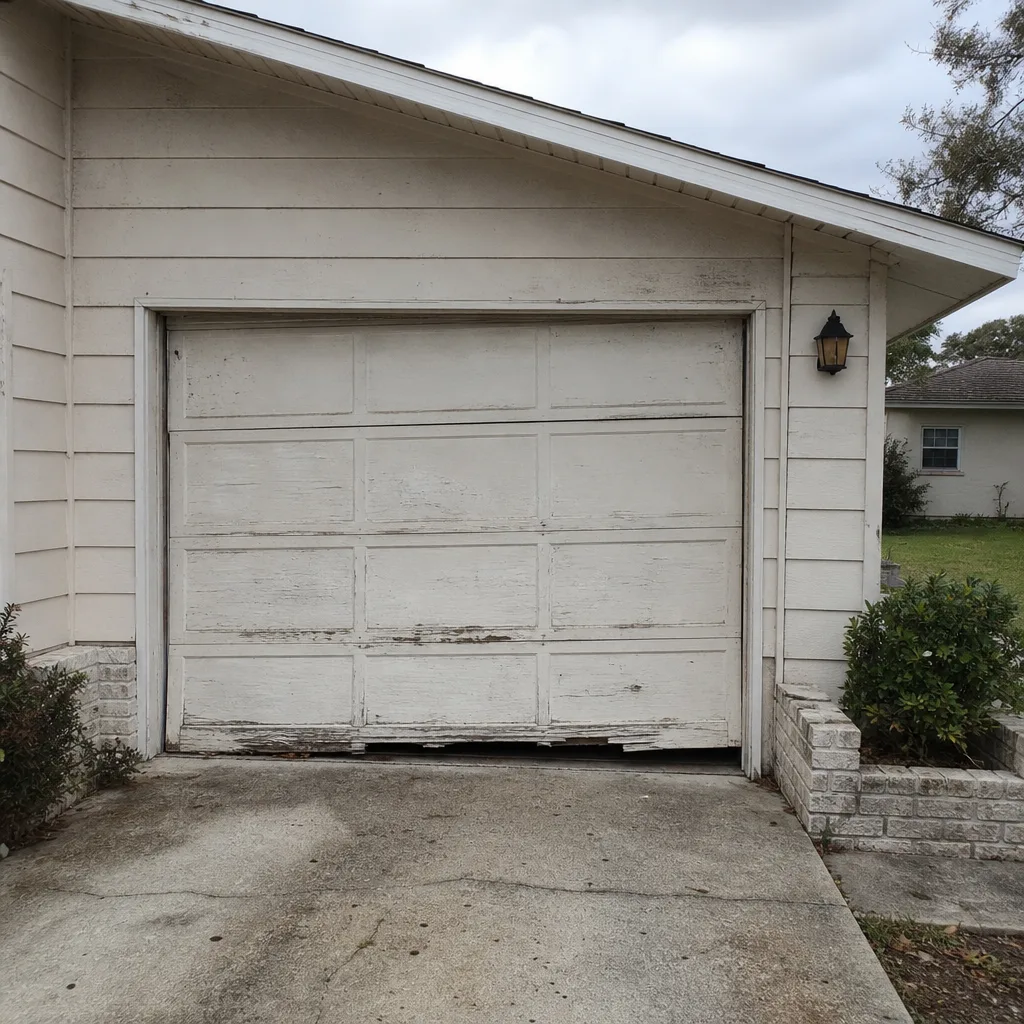 Before
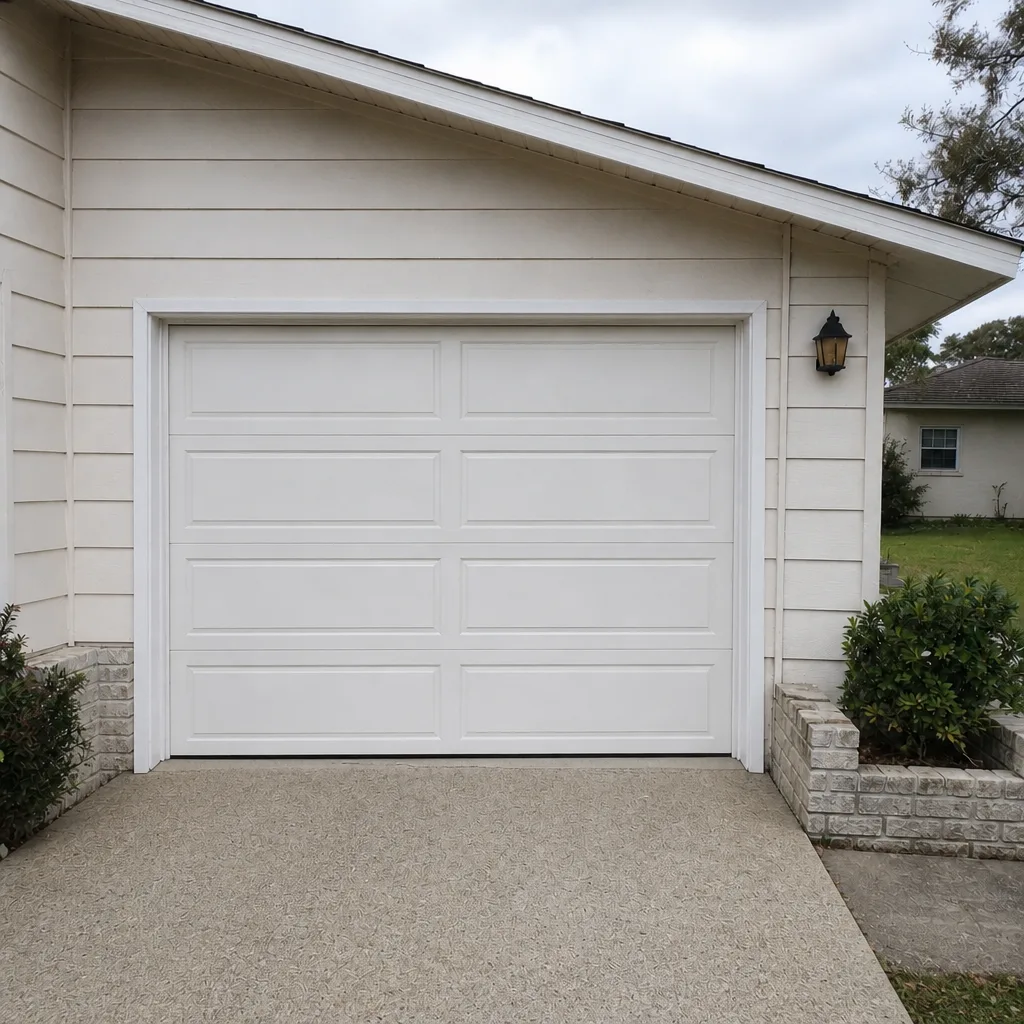 After
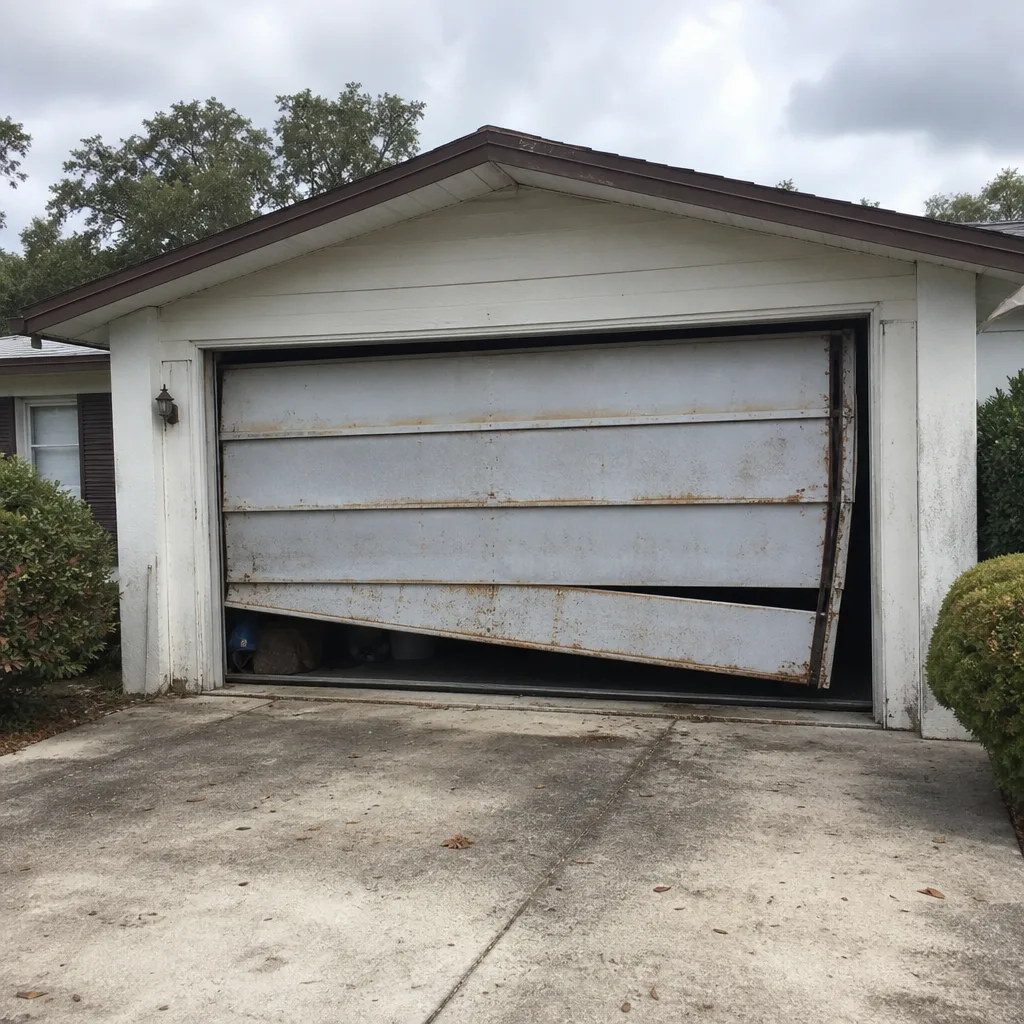 Before
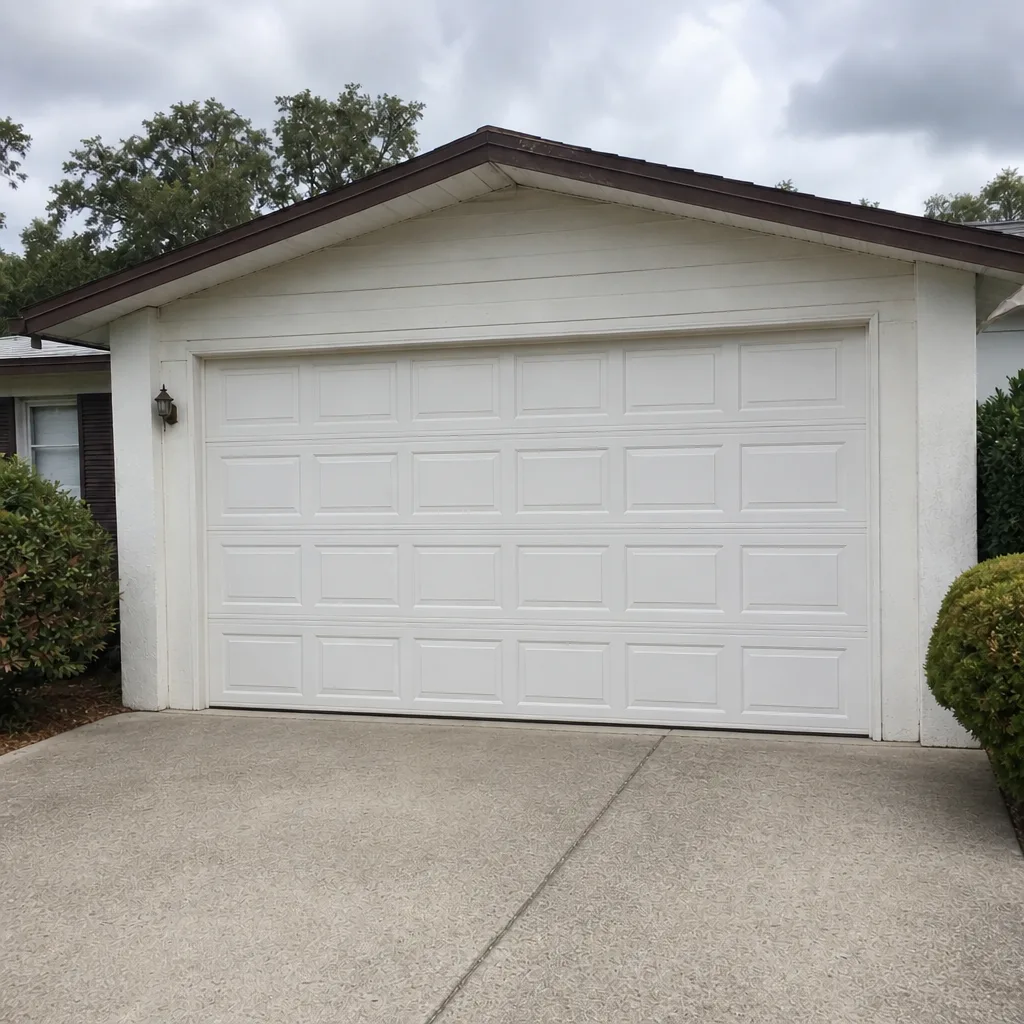 After
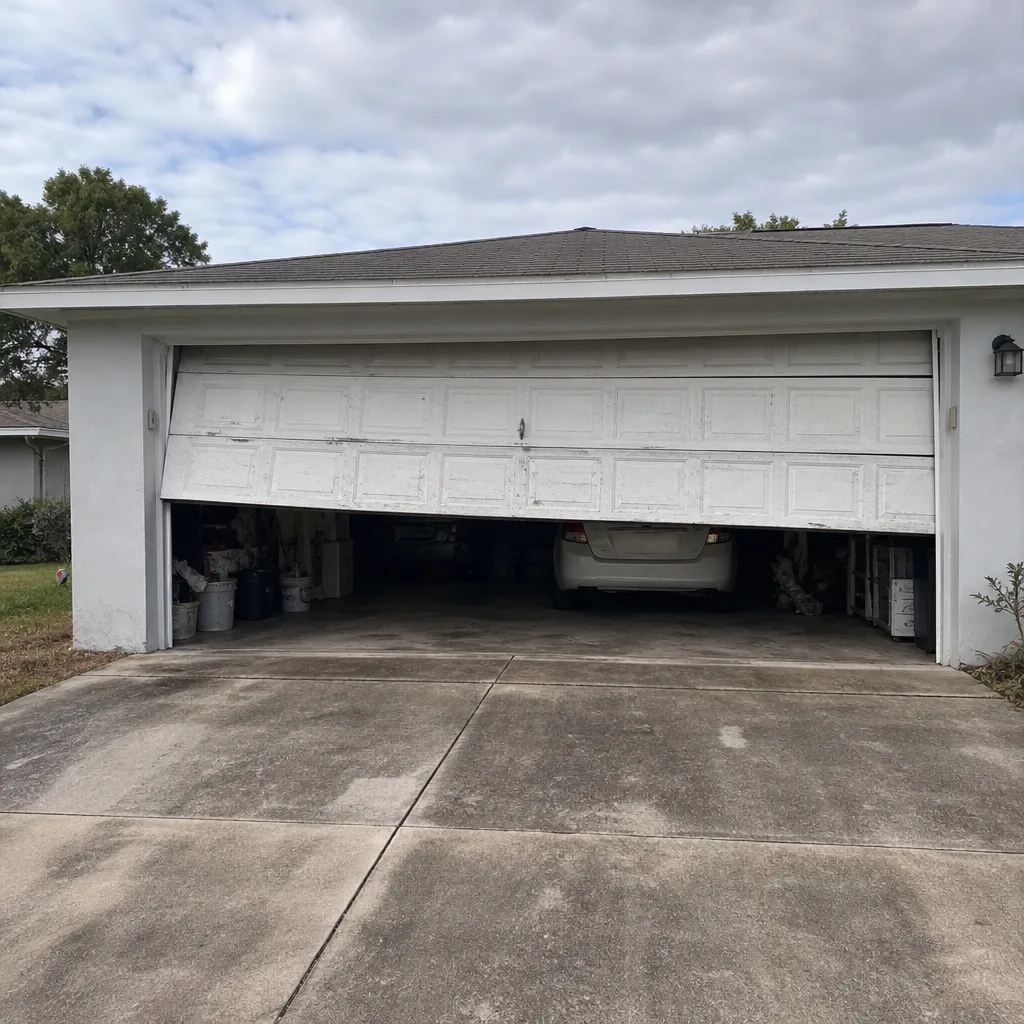 Before
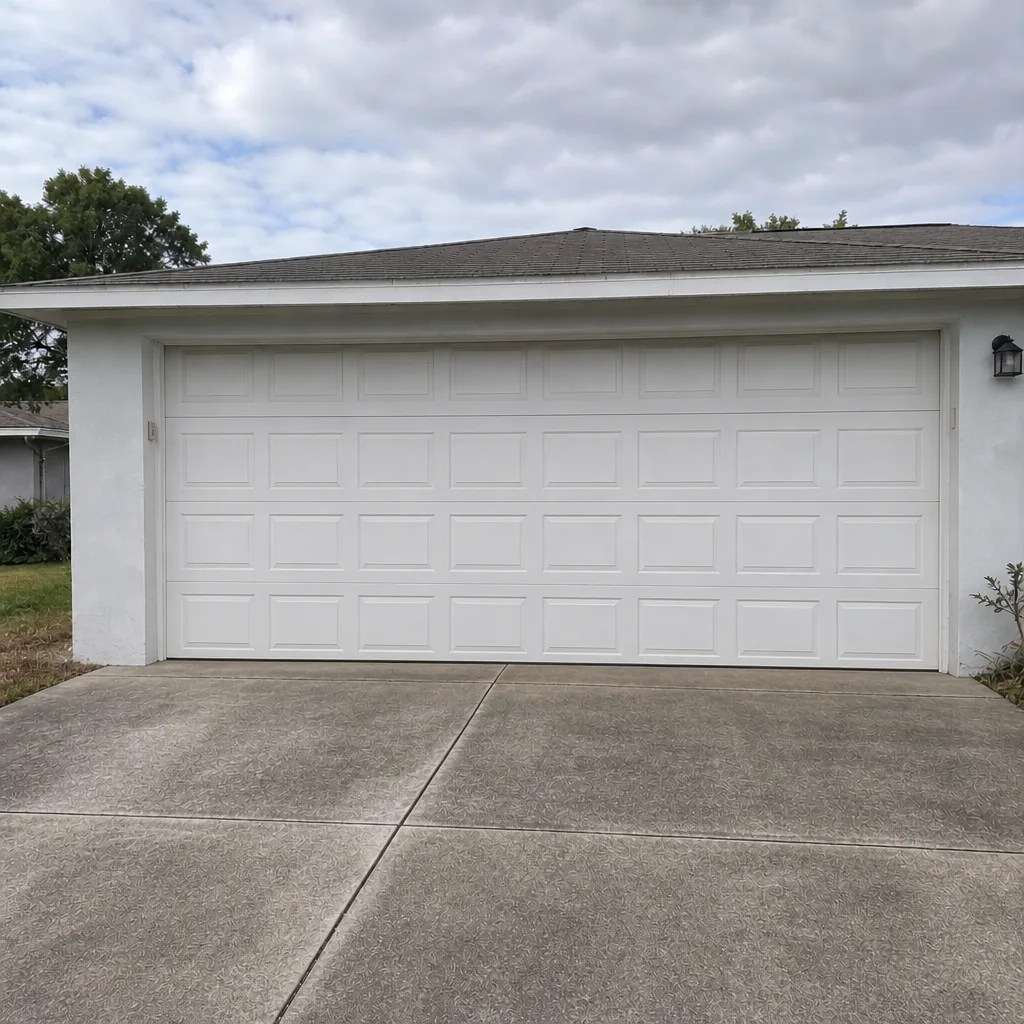 After
When to Call a Professional
Some jobs are safe to handle with a checklist: testing the manual release, checking the bottom seal, lubricating rollers, noting whether the door feels heavier. Some are not. Call a trained technician when the spring feels loose or looks stretched, when you hear popping or creaking under load, when a bracket or track has visibly moved, when the door won’t close the last few inches, or when the opener is straining to lift a door it used to lift easily. All of those point to parts under tension, and a wrong move can mean a serious injury. Sun City Center Garage Door Repair offers free estimates in Sun City Center – call (855) 658-4128.
One more case worth flagging: if the door won’t move at all and your car is stuck inside, that’s an emergency call, not a scheduled one. We handle emergency garage door service because we know a stuck door is an access problem for the whole household, not just an inconvenience.
Frequently Asked Questions
Once a year is enough for most Sun City Center homes, timed to land before the peak-heat window. If your door faces direct afternoon sun or you’re in a hurricane-exposed neighborhood, do a quick self-check before each of the three stress periods in addition to the annual service.
Because torsion springs lose effective tension as the metal expands in the heat. The door isn’t broken – it’s working against a different balance point. If the heaviness shows up in July and the door felt normal in January, that’s a sign to have the spring checked. Don’t try to adjust it yourself; a loaded torsion spring is a serious injury risk. Call (855) 658-4128 for an estimate.
Three things: bracket integrity, bottom seal, and manual release function. Brackets carry the door’s weight under wind load, the bottom seal keeps out wind-driven rain, and the manual release is what gets you moving when the power is out. All three are quick, safe checks. Anything that shows wear is worth a technician’s look before the season starts.
Yes, for the parts you can see without tools. Walk the tracks, check the bottom seal for water intrusion, look at the brackets for rust streaks, and pull the manual release to test it. Don’t touch the spring, the cables, or the track alignment – those are for a technician. A visual pass catches most issues before they become a breakdown.
We service LiftMaster, Chamberlain, Genie, Clopay, Amarr, Wayne Dalton, Craftsman and Raynor. Spring behavior and opener diagnostics vary by system, so knowing the brand up front means we diagnose by design rather than by trial and error. It’s the reason we ask for the brand when you call.
Yes, in small ways. Rollers stiffen when the overnight temperature drops, and weatherstripping shrinks slightly against the frame. Neither is a major failure, but both are easy to spot – and worth catching – before the next heat stretch strains the door again.
Yes. We treat a stuck or broken door as an emergency because it blocks vehicle access and leaves the garage exposed. Call (855) 658-4128 and describe what the door is doing – whether it’s stuck, popping, or refusing to move – and we’ll book the right visit.
The Bottom Line
Sun City Center doesn’t follow the four-season maintenance calendar most websites hand you. It has three stress periods, each one breaking a different part of the door: a pre-hurricane window for brackets, seals, and manual release; a summer heat window that changes spring tension; and a short cool-down that stiffens lubricant and shrinks seals. Build a one-page calendar around those three, keep spring and track work with a trained technician, and do a safe post-storm walkaround before calling. The house is in a climate that rewards attention to timing more than frequency. If you want help setting it up, our garage door opener repair team can look at the opener while the spring and hardware get a proper seasonal inspection. Call Sun City Center Garage Door Repair at (855) 658-4128 for a free estimate – we work on your brand, garage doors only – wherever you are in Sun City Center.
Written by the team at Sun City Center Garage Door Repair.